
Ultra-Low-Power RTC for Body Cameras: YSN8563 Precision Timing & Extended Battery Life
Time: 2026-06-11 16:13:46
As law enforcement digitalization accelerates worldwide, body-worn cameras have become a core requirement for police, public safety, and security personnel. However, frontline field deployments consistently expose critical timing weaknesses in current body camera designs — excessive system power drain, insufficient battery endurance, and timestamp drift across extreme temperatures. These issues lead to corrupted audio/video chronology and compromised evidence chain integrity. To address these challenges head-on, YXC (Yangxing Technology) introduces the YSN8563 ultra-low-power RTC chip — a purpose-built timing solution fully optimized for the demanding requirements of body-worn law enforcement recording devices.

Figure 1: YSN8563 application reference — typical integration architecture for body-worn camera timing modules.
1. YSN8563 RTC — Core Specifications at a Glance
The YSN8563 is a discrete real-time clock IC with a standard I2C bus interface, engineered to combine ultra-low power consumption, wide-temperature operation, high long-term stability, and exceptional cost-performance. It is ideally suited for portable, battery-operated, outdoor-deployed terminals such as body-worn cameras.
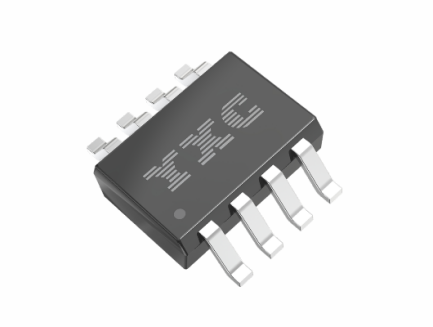
Figure 2: YSN8563 RTC chip — SOP-8/TSSOP-8/MSOP-8 package options and pin configuration.

Figure 3: YST310S.
| Parameter | Specification |
|---|---|
| Crystal Requirement | External 32.768 kHz crystal (recommended: YST310S) |
| Accuracy | Determined by external crystal selection |
| Package | SOP-8 / TSSOP-8 / MSOP-8 |
| Operating Temperature | -40°C ~ +85°C, fully outdoor-rated |
| Current Consumption | 0.25 μA (typ. @ 3.0V, +25°C) |
| Operating Voltage | 1.8 V ~ 5.5 V |
| Timekeeping Voltage | 1.0 V ~ 5.5 V |
| Communication Interface | Standard I2C bus (up to 400 kHz Fast-mode) |
| Key Features | Calendar, timer, alarm, interrupt output, low-voltage detection |
2. Industry Pain Points & YSN8563 Targeted Solutions
The core mission of a body-worn camera is to capture authentic, traceable, and legally admissible evidentiary recordings. Precise time-stamping and sustained battery endurance are the two non-negotiable pillars of reliable body camera operation. Today's field-deployed body cameras commonly face three critical timing challenges — each addressed by YSN8563 with a dedicated engineering solution.
Pain Point 1: Excessive Daily Time Deviation — Poor Baseline Timing Accuracy
Body-worn cameras are held to stringent time-recording standards. Many currently deployed devices exhibit significant clock drift, with timing errors exceeding acceptable thresholds. In critical scenarios such as incident liability assessment, use-of-force timeline verification, and statutory admissibility review, chronologically inaccurate data severely undermines evidence credibility and fails to meet the procedural rigor demanded by judicial scrutiny.
✓ YSN8563 Solution — High-Precision Timekeeping Architecture
- Precise calendar output: Delivers complete year, month, day, weekday, hour, minute, and second data, ensuring system-wide time accuracy and synchronization.
- Read-consistent design: When the host MCU accesses the time registers, the internal counter circuitry automatically pauses. This guarantees that every read operation captures an atomic, logically consistent snapshot of the current time — eliminating the risk of data corruption caused by register rollover during multi-byte reads.
- Low-voltage detection: When the supply voltage drops below the reliable operating threshold, the chip asserts a status flag to proactively alert the host system. This early warning mechanism prevents timing corruption and data loss caused by brownout conditions, safeguarding time-data authenticity throughout the entire recording lifecycle.
Pain Point 2: Excessive System Power Consumption — Insufficient Outdoor Battery Endurance
Body cameras must operate continuously throughout an officer's entire shift. Outdoor law enforcement operations often extend for 8–12 hours or longer. If the RTC chip draws excessive current, it steadily drains the device battery and directly shortens operational endurance, potentially causing the camera to shut down before a full-shift recording is complete.
✓ YSN8563 Solution — Industry-Leading Ultra-Low Power Design
Pain Point 3: Wide-Temperature Timing Drift — Poor Environmental Temperature Stability
Outdoor law enforcement environments are inherently unpredictable — officers operate in extreme heat, freezing cold, heavy rain, and snow. Conventional timing solutions exhibit significant frequency drift across wide temperature ranges, which can cause multiple cameras at the same incident scene to record mismatched timestamps, or produce a material discrepancy between the recorded timestamp and the actual event time. Such discrepancies directly jeopardize the judicial validity of digital evidence and fall short of the high-reliability standards mandated for law enforcement equipment.
✓ YSN8563 Solution — Ruggedized Wide-Temperature Performance
- Exceptional wide-temperature operation: Supports a full -40°C ~ +85°C operating range. Even under extreme high and low temperature conditions, the YSN8563 maintains extremely low time drift with stable, reliable timing accuracy. This ensures that body camera recordings remain chronologically compliant and legally effective at the source — regardless of environmental extremes.
3. Conclusion: YSN8563 — The Optimal RTC for Body Camera Timing Modules
Leveraging its three core competitive advantages — precision timekeeping, ultra-low power consumption, and robust wide-temperature performance — the YSN8563 from YXC Yangxing Technology directly resolves the most pressing pain points in current body-worn camera designs: short battery life, timestamp deviation, and environmental vulnerability. The YSN8563 provides an accurate and reliable real-time clock reference that simultaneously safeguards the legality and traceability of law enforcement evidence while effectively extending outdoor operational endurance. It represents the premier RTC choice for next-generation body camera timing modules.
For complete datasheets, application notes, evaluation samples, or engineering consultation on integrating the YSN8563 into your body camera design, our field application team is ready to support your project requirements.
Get YSN8563 Samples & Body Camera RTC Technical Support
●0.25μA Ultra-Low Power
●-40°C ~ +85°C Wide Temp
●I2C Interface + Alarm Output
●Free Datasheet & Sample Request
Ultra-Low-Power RTC for Body Cameras: YSN8563 Precision Timing & Extended Battery Life
Time: 2026-06-11 16:13:46
As law enforcement digitalization accelerates worldwide, body-worn cameras have become a core requirement for police, public safety, and security personnel. However, frontline field deployments consistently expose critical timing weaknesses in current body camera designs — excessive system power drain, insufficient battery endurance, and timestamp drift across extreme temperatures. These issues lead to corrupted audio/video chronology and compromised evidence chain integrity. To address these challenges head-on, YXC (Yangxing Technology) introduces the YSN8563 ultra-low-power RTC chip — a purpose-built timing solution fully optimized for the demanding requirements of body-worn law enforcement recording devices.
Figure 1: YSN8563 application reference — typical integration architecture for body-worn camera timing modules.
1. YSN8563 RTC — Core Specifications at a Glance
The YSN8563 is a discrete real-time clock IC with a standard I2C bus interface, engineered to combine ultra-low power consumption, wide-temperature operation, high long-term stability, and exceptional cost-performance. It is ideally suited for portable, battery-operated, outdoor-deployed terminals such as body-worn cameras.
Figure 2: YSN8563 RTC chip — SOP-8/TSSOP-8/MSOP-8 package options and pin configuration.
Figure 3: YST310S.
| Parameter | Specification |
|---|---|
| Crystal Requirement | External 32.768 kHz crystal (recommended: YST310S) |
| Accuracy | Determined by external crystal selection |
| Package | SOP-8 / TSSOP-8 / MSOP-8 |
| Operating Temperature | -40°C ~ +85°C, fully outdoor-rated |
| Current Consumption | 0.25 μA (typ. @ 3.0V, +25°C) |
| Operating Voltage | 1.8 V ~ 5.5 V |
| Timekeeping Voltage | 1.0 V ~ 5.5 V |
| Communication Interface | Standard I2C bus (up to 400 kHz Fast-mode) |
| Key Features | Calendar, timer, alarm, interrupt output, low-voltage detection |
2. Industry Pain Points & YSN8563 Targeted Solutions
The core mission of a body-worn camera is to capture authentic, traceable, and legally admissible evidentiary recordings. Precise time-stamping and sustained battery endurance are the two non-negotiable pillars of reliable body camera operation. Today's field-deployed body cameras commonly face three critical timing challenges — each addressed by YSN8563 with a dedicated engineering solution.
Pain Point 1: Excessive Daily Time Deviation — Poor Baseline Timing Accuracy
Body-worn cameras are held to stringent time-recording standards. Many currently deployed devices exhibit significant clock drift, with timing errors exceeding acceptable thresholds. In critical scenarios such as incident liability assessment, use-of-force timeline verification, and statutory admissibility review, chronologically inaccurate data severely undermines evidence credibility and fails to meet the procedural rigor demanded by judicial scrutiny.
✓ YSN8563 Solution — High-Precision Timekeeping Architecture
- Precise calendar output: Delivers complete year, month, day, weekday, hour, minute, and second data, ensuring system-wide time accuracy and synchronization.
- Read-consistent design: When the host MCU accesses the time registers, the internal counter circuitry automatically pauses. This guarantees that every read operation captures an atomic, logically consistent snapshot of the current time — eliminating the risk of data corruption caused by register rollover during multi-byte reads.
- Low-voltage detection: When the supply voltage drops below the reliable operating threshold, the chip asserts a status flag to proactively alert the host system. This early warning mechanism prevents timing corruption and data loss caused by brownout conditions, safeguarding time-data authenticity throughout the entire recording lifecycle.
Pain Point 2: Excessive System Power Consumption — Insufficient Outdoor Battery Endurance
Body cameras must operate continuously throughout an officer's entire shift. Outdoor law enforcement operations often extend for 8–12 hours or longer. If the RTC chip draws excessive current, it steadily drains the device battery and directly shortens operational endurance, potentially causing the camera to shut down before a full-shift recording is complete.
✓ YSN8563 Solution — Industry-Leading Ultra-Low Power Design
Pain Point 3: Wide-Temperature Timing Drift — Poor Environmental Temperature Stability
Outdoor law enforcement environments are inherently unpredictable — officers operate in extreme heat, freezing cold, heavy rain, and snow. Conventional timing solutions exhibit significant frequency drift across wide temperature ranges, which can cause multiple cameras at the same incident scene to record mismatched timestamps, or produce a material discrepancy between the recorded timestamp and the actual event time. Such discrepancies directly jeopardize the judicial validity of digital evidence and fall short of the high-reliability standards mandated for law enforcement equipment.
✓ YSN8563 Solution — Ruggedized Wide-Temperature Performance
- Exceptional wide-temperature operation: Supports a full -40°C ~ +85°C operating range. Even under extreme high and low temperature conditions, the YSN8563 maintains extremely low time drift with stable, reliable timing accuracy. This ensures that body camera recordings remain chronologically compliant and legally effective at the source — regardless of environmental extremes.
3. Conclusion: YSN8563 — The Optimal RTC for Body Camera Timing Modules
Leveraging its three core competitive advantages — precision timekeeping, ultra-low power consumption, and robust wide-temperature performance — the YSN8563 from YXC Yangxing Technology directly resolves the most pressing pain points in current body-worn camera designs: short battery life, timestamp deviation, and environmental vulnerability. The YSN8563 provides an accurate and reliable real-time clock reference that simultaneously safeguards the legality and traceability of law enforcement evidence while effectively extending outdoor operational endurance. It represents the premier RTC choice for next-generation body camera timing modules.
For complete datasheets, application notes, evaluation samples, or engineering consultation on integrating the YSN8563 into your body camera design, our field application team is ready to support your project requirements.
Get YSN8563 Samples & Body Camera RTC Technical Support
●0.25μA Ultra-Low Power
●-40°C ~ +85°C Wide Temp
●I2C Interface + Alarm Output
●Free Datasheet & Sample Request
Other Articles
-

Epson M-G365 IMU: 6-DoF Precision for Drones & Robotics
-
YQ8563: Drop-In Low-Power RTC Replacement for NXP PCF8563
-
Industrial Robot Clocking: Why MEMS Timing Beats Quartz
-
SGT MOSFET for Robotics: Joint Motor Drive & Battery Protection
-
YQ8025T RTC: Built-in DTCXO, No Crystal — RX8025T Alternative
-
Sunlord WL-FS Wire-Wound Ferrite Inductors for Audio Lines: Purer Sound, Lower THD
-
SiTime PNT Timing Foundation: Why Precision Oscillators Define Modern Navigation
-
YXC High-Performance Timing Devices Empowering a New Experience in AI Wearables
-
NCE90N800F 900V Super-Junction MOSFET — CoolMOS Alternative
-
Epson TSX-3225C Crystal: Pin-to-Pin FA-238 Upgrade for 5G, IoT & Automotive


Copyright By © YQM ELECTRONICS INTL LIMITED SITEMAP
Email: sales@yqmec.com

点击右上角
分享给朋友吧


