
11.0592MHz Crystal Oscillator: The "Heart" of the Computer Motherboard?
Time: 2025-07-03 15:55:29
When talking about computer motherboards, most people might think of high-profile hardware like the CPU, RAM, or graphics card. However, there is an unsung component that plays a crucial role – the 11.0592MHz crystal oscillator. It acts like the 'heart' of the motherboard, providing a stable clock signal for the entire system. So, just how important is this tiny oscillator? What are its applications and characteristics? Let's explore together!
The Crystal Oscillator: The Motherboard's 'Metronome'

On a computer motherboard, the role of the 11.0592MHz crystal oscillator is to provide a reference frequency for the entire system. Simply put, it acts like a precise metronome, ensuring that all components on the motherboard operate to a unified rhythm. Whether it's the CPU executing instructions or RAM transferring data, all rely on this stable clock signal.
The choice of the 11.0592MHz frequency is not arbitrary; it is closely tied to the history of the computer industry. In early computer systems, many components were designed around this frequency, making it one of the industry standards. Even though modern computers have seen a qualitative leap in performance, the 11.0592MHz crystal oscillator still plays a vital role in many motherboards.
Applications of the 11.0592MHz Crystal Oscillator
The application of the 11.0592MHz crystal oscillator is primarily focused on computer motherboards, especially in some classic motherboard designs. Here are a few common package types:
1. HC-49US
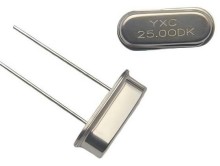
HC-49US is a common through-hole type crystal oscillator, suitable for motherboard designs with ample space and a focus on low cost. It offers high frequency stability, meeting the requirements of most computer motherboards.
2. HC-49SMD
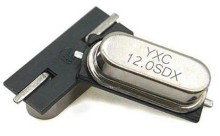
HC-49SMD is a surface-mount device (SMD) crystal oscillator. Compared to HC-49US, it can be mounted onto circuit boards much faster via automated assembly. Its performance is equally excellent, providing a stable clock signal for the system.
3. YSX321SL
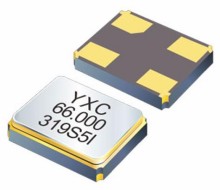
YSX321SLis a high-frequency crystal oscillator with a broader frequency range, capable of meeting the needs of some specialized motherboard designs. Compared to the previous two types, it is not only smaller (3.2x2.5mm) but also shares the advantage of low cost. It boasts extremely high stability, making it suitable for systems demanding high-precision clock signals.
Crystal Oscillator Selection and Impact
When selecting an 11.0592MHz crystal oscillator, several key factors need consideration:
Frequency Stability: This is core to reliable system operation. Frequency drift can cause motherboard malfunctions or even system crashes.
Package Type: The form factor must match the motherboard design. For example, SMD oscillators suit high-density motherboards, while through-hole types are better for conventional boards with more space.
Brand and Quality: This is a critical factor that cannot be overlooked. Choosing a high-quality crystal oscillator provides more stable performance, longer lifespan, and ultimately higher reliability for the entire system.
Future Trends for Crystal Oscillators
As computer technology continues to advance, the application of 11.0592MHz crystal oscillators is also evolving. Future crystal oscillulators may develop in several directions: higher frequencies, smaller packages, and smarter integration. The demand for clock signal frequencies will inevitably rise, driving oscillators towards higher frequencies to meet increasingly complex computational needs. Simultaneously, motherboard designs evolving towards miniaturization and compactness will push crystal oscillator package sizes to shrink further, adapting to high-density layouts. Additionally, functional integration will become a significant trend. Future crystal oscillators may embed modules like temperature compensation and frequency adjustment, significantly enhancing the overall stability and performance of systems.
After reading this article, do you have a deeper understanding of the 11.0592MHz crystal oscillator? Have you ever encountered computer failures caused by crystal oscillator issues? Or do you have unique insights into the future development of crystal oscillators? Feel free to share your thoughts in the comments section below! Let's explore the mysteries behind computer motherboards together!
11.0592MHz Crystal Oscillator: The "Heart" of the Computer Motherboard?
Time: 2025-07-03 15:55:29
When talking about computer motherboards, most people might think of high-profile hardware like the CPU, RAM, or graphics card. However, there is an unsung component that plays a crucial role – the 11.0592MHz crystal oscillator. It acts like the 'heart' of the motherboard, providing a stable clock signal for the entire system. So, just how important is this tiny oscillator? What are its applications and characteristics? Let's explore together!
The Crystal Oscillator: The Motherboard's 'Metronome'
On a computer motherboard, the role of the 11.0592MHz crystal oscillator is to provide a reference frequency for the entire system. Simply put, it acts like a precise metronome, ensuring that all components on the motherboard operate to a unified rhythm. Whether it's the CPU executing instructions or RAM transferring data, all rely on this stable clock signal.
The choice of the 11.0592MHz frequency is not arbitrary; it is closely tied to the history of the computer industry. In early computer systems, many components were designed around this frequency, making it one of the industry standards. Even though modern computers have seen a qualitative leap in performance, the 11.0592MHz crystal oscillator still plays a vital role in many motherboards.
Applications of the 11.0592MHz Crystal Oscillator
The application of the 11.0592MHz crystal oscillator is primarily focused on computer motherboards, especially in some classic motherboard designs. Here are a few common package types:
1. HC-49US
HC-49US is a common through-hole type crystal oscillator, suitable for motherboard designs with ample space and a focus on low cost. It offers high frequency stability, meeting the requirements of most computer motherboards.
2. HC-49SMD
HC-49SMD is a surface-mount device (SMD) crystal oscillator. Compared to HC-49US, it can be mounted onto circuit boards much faster via automated assembly. Its performance is equally excellent, providing a stable clock signal for the system.
3. YSX321SL
YSX321SLis a high-frequency crystal oscillator with a broader frequency range, capable of meeting the needs of some specialized motherboard designs. Compared to the previous two types, it is not only smaller (3.2x2.5mm) but also shares the advantage of low cost. It boasts extremely high stability, making it suitable for systems demanding high-precision clock signals.
Crystal Oscillator Selection and Impact
When selecting an 11.0592MHz crystal oscillator, several key factors need consideration:
Frequency Stability: This is core to reliable system operation. Frequency drift can cause motherboard malfunctions or even system crashes.
Package Type: The form factor must match the motherboard design. For example, SMD oscillators suit high-density motherboards, while through-hole types are better for conventional boards with more space.
Brand and Quality: This is a critical factor that cannot be overlooked. Choosing a high-quality crystal oscillator provides more stable performance, longer lifespan, and ultimately higher reliability for the entire system.
Future Trends for Crystal Oscillators
As computer technology continues to advance, the application of 11.0592MHz crystal oscillators is also evolving. Future crystal oscillulators may develop in several directions: higher frequencies, smaller packages, and smarter integration. The demand for clock signal frequencies will inevitably rise, driving oscillators towards higher frequencies to meet increasingly complex computational needs. Simultaneously, motherboard designs evolving towards miniaturization and compactness will push crystal oscillator package sizes to shrink further, adapting to high-density layouts. Additionally, functional integration will become a significant trend. Future crystal oscillators may embed modules like temperature compensation and frequency adjustment, significantly enhancing the overall stability and performance of systems.
After reading this article, do you have a deeper understanding of the 11.0592MHz crystal oscillator? Have you ever encountered computer failures caused by crystal oscillator issues? Or do you have unique insights into the future development of crystal oscillators? Feel free to share your thoughts in the comments section below! Let's explore the mysteries behind computer motherboards together!
Other Articles
-

Role of 32.768 kHz in Circuit Design
-
SiTime Automotive Oscillators
-
The Role of 32.768kHz in Circuits
-
11.0592MHz Crystal Oscillator: The "Heart" of the Computer Motherboard?
-
Epson RTC modules solve three major pain points of ioT
-
Examine the cost and design considerations of crystals and oscillators
-
Exploring how YXC oscillators show their skills to help with AI servers
-
Lessons from the Middle East Events — The Importance of Localization!
-
Honeywell HH760 Handheld 2D Area Imager Barcode Scanner
-
YXC Active Differential Programmable Crystal Oscillator Supports 5G Base Station Applications


Copyright By © YQM ELECTRONICS INTL LIMITED SITEMAP
Email: sales@yqmec.com

点击右上角
分享给朋友吧


