
Lessons from the Middle East Events — The Importance of Localization!
Time: 2024-09-27 17:04:57
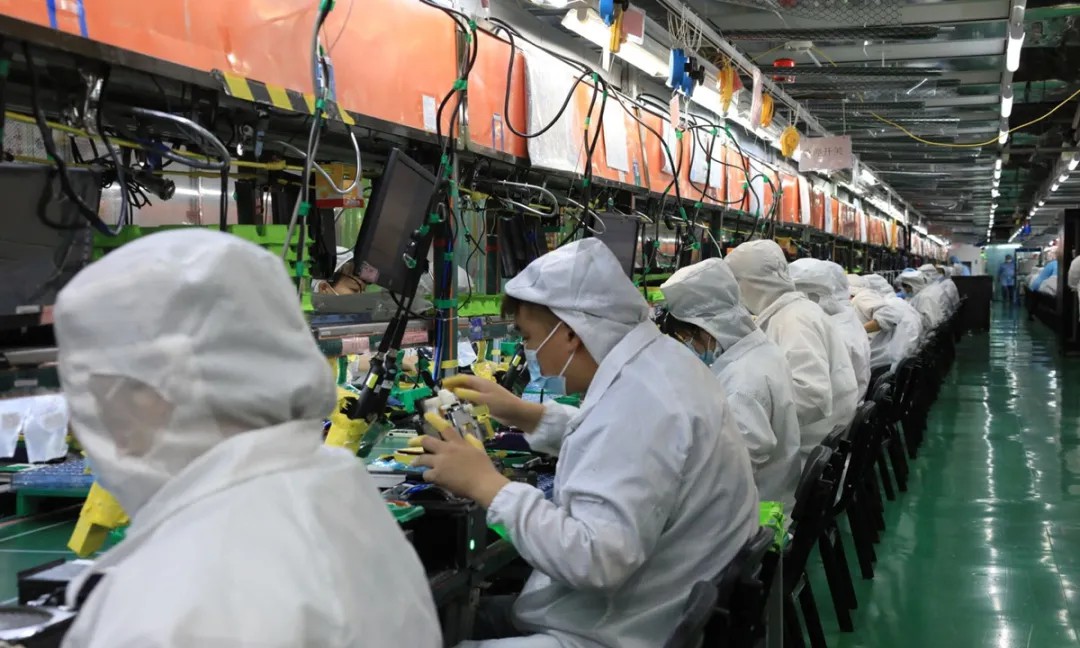
'Made in China' used to be synonymous with cheapness. However, with the advancement and development of Chinese technology, China now has been walking in the forefront of the world in multiple industries, transforming from 'Made in China' to 'Intelligent Manufacturing in China' and 'Created in China.'
- l In the field of new energy vehicles, the market share reached 31.6% in 2023, an increase of 5.9% compared to the same period last year, maintaining the world's top position for nine consecutive years.
- l China's high-speed rail network is the largest and most advanced one in the world, with an operating mileage exceeding 42,000 kilometers as of 2023, accounting for over 60% of the world's total.
- l China owns the highest popularity rate of mobile payment globally, with platforms like Alipay and WeChat Pay boasting a large user base that covers various fields from daily consumption to online payments and financial services.
- l China is in a leading place of 5G technology research and application on earth, with companies like Huawei and ZTE playing key roles in 5G network construction. Recently, at a conference held in Melbourne, China Mobile led the world's first 6G scenario application and demand research project, which received support from 90 companies, successfully passing six major scenarios.
As globalization deepens, international competition is becoming increasingly fierce. The technology blockades and economic sanctions imposed by some countries have posed unprecedented challenges to China's economic development. In this context, accelerating the localization process has become an inevitable choice to ensure national economic security and enhance international competitiveness. From the tiny components on circuit board to huge airplanes and ships, China is gradually breaking through technological barriers and achieving independent innovation.

Recently, the tense situation in the Middle East has prompted reflection, as criminals used pagers and beepers to carry out attacks. This underscores that localization is not just about technology and application, it also pertains to personal safety and national security. Localization is no longer merely a requirement for Chinese companies when selecting suppliers, it is increasingly becoming the choice of other countries and enterprises that prioritize supply chain security. China is consistently pursuing the independent and peaceful foreign policy, and with the enhancement of China's international status, 'Made in China' has acquired another layer of meaning — security. No one can accept the idea that one day the electronic devices they carry will turn into weapons used by terrorists for attacks. Furthermore, China has a complete industrial system and advanced manufacturing capabilities, establishing itself as a genuine manufacturing powerhouse and becoming the preferred country for those seeking supply chain security.
Components are the core of modern electronic technology, supporting the development of the information technology industry and playing a crucial role in technological advancement and social lifestyle changes. The path to localization for electronic components is not easy, with chips being the most challenging. As key component of various electronic devices, China has long relied on imports for chips. In 2016, China's self-sufficiency rate in chips was only 10%, but by 2023, it has increased to 23.3%. Although the production of high-end chips is hindered by export restrictions on manufacturing equipment, there is no doubt that China's semiconductor industry has made significant progress in terms of production capacity and the replacement rate of domestic equipment.

Among the various components, in addition to chips, the localization rates of crystal oscillators, sensors, capacitors, resistors, inductors, MOSFETs, and LED chips are also continuously improving. YQM can supply all these electronic categories in domestic Chinese brands. Apart from the aforementioned agent and distributing categories, the parent company YANGXING is also a Chinese local enterprise dedicated to the research, production, and sales of clock frequency devices, complying with AEC-Q200 and IATF16949 automotive system certifications. Being efficient, safe and reliable, its products are widely used in the fields of automotive, communications, industrial, medical, and military etc, having been serving over 40,000 customers since its establishment. YQM will continue to provide customers with safe and reliable electronic components, contributing its efforts to the construction of localization.
Lessons from the Middle East Events — The Importance of Localization!
Time: 2024-09-27 17:04:57
'Made in China' used to be synonymous with cheapness. However, with the advancement and development of Chinese technology, China now has been walking in the forefront of the world in multiple industries, transforming from 'Made in China' to 'Intelligent Manufacturing in China' and 'Created in China.'
- l In the field of new energy vehicles, the market share reached 31.6% in 2023, an increase of 5.9% compared to the same period last year, maintaining the world's top position for nine consecutive years.
- l China's high-speed rail network is the largest and most advanced one in the world, with an operating mileage exceeding 42,000 kilometers as of 2023, accounting for over 60% of the world's total.
- l China owns the highest popularity rate of mobile payment globally, with platforms like Alipay and WeChat Pay boasting a large user base that covers various fields from daily consumption to online payments and financial services.
- l China is in a leading place of 5G technology research and application on earth, with companies like Huawei and ZTE playing key roles in 5G network construction. Recently, at a conference held in Melbourne, China Mobile led the world's first 6G scenario application and demand research project, which received support from 90 companies, successfully passing six major scenarios.
As globalization deepens, international competition is becoming increasingly fierce. The technology blockades and economic sanctions imposed by some countries have posed unprecedented challenges to China's economic development. In this context, accelerating the localization process has become an inevitable choice to ensure national economic security and enhance international competitiveness. From the tiny components on circuit board to huge airplanes and ships, China is gradually breaking through technological barriers and achieving independent innovation.
Recently, the tense situation in the Middle East has prompted reflection, as criminals used pagers and beepers to carry out attacks. This underscores that localization is not just about technology and application, it also pertains to personal safety and national security. Localization is no longer merely a requirement for Chinese companies when selecting suppliers, it is increasingly becoming the choice of other countries and enterprises that prioritize supply chain security. China is consistently pursuing the independent and peaceful foreign policy, and with the enhancement of China's international status, 'Made in China' has acquired another layer of meaning — security. No one can accept the idea that one day the electronic devices they carry will turn into weapons used by terrorists for attacks. Furthermore, China has a complete industrial system and advanced manufacturing capabilities, establishing itself as a genuine manufacturing powerhouse and becoming the preferred country for those seeking supply chain security.
Components are the core of modern electronic technology, supporting the development of the information technology industry and playing a crucial role in technological advancement and social lifestyle changes. The path to localization for electronic components is not easy, with chips being the most challenging. As key component of various electronic devices, China has long relied on imports for chips. In 2016, China's self-sufficiency rate in chips was only 10%, but by 2023, it has increased to 23.3%. Although the production of high-end chips is hindered by export restrictions on manufacturing equipment, there is no doubt that China's semiconductor industry has made significant progress in terms of production capacity and the replacement rate of domestic equipment.
Among the various components, in addition to chips, the localization rates of crystal oscillators, sensors, capacitors, resistors, inductors, MOSFETs, and LED chips are also continuously improving. YQM can supply all these electronic categories in domestic Chinese brands. Apart from the aforementioned agent and distributing categories, the parent company YANGXING is also a Chinese local enterprise dedicated to the research, production, and sales of clock frequency devices, complying with AEC-Q200 and IATF16949 automotive system certifications. Being efficient, safe and reliable, its products are widely used in the fields of automotive, communications, industrial, medical, and military etc, having been serving over 40,000 customers since its establishment. YQM will continue to provide customers with safe and reliable electronic components, contributing its efforts to the construction of localization.
Other Articles
-

Role of 32.768 kHz in Circuit Design
-
SiTime Automotive Oscillators
-
The Role of 32.768kHz in Circuits
-
11.0592MHz Crystal Oscillator: The "Heart" of the Computer Motherboard?
-
Epson RTC modules solve three major pain points of ioT
-
Examine the cost and design considerations of crystals and oscillators
-
Exploring how YXC oscillators show their skills to help with AI servers
-
Lessons from the Middle East Events — The Importance of Localization!
-
Good News: YQM won Epson's 2023 New Market Development Award !!!
-
YXC Active Differential Programmable Crystal Oscillator Supports 5G Base Station Applications


Copyright By © YQM ELECTRONICS INTL LIMITED SITEMAP
Email: sales@yqmec.com

点击右上角
分享给朋友吧


