
GB 14287.7 Compliance: Jinlan Power Modules Pass Production Validation
Time: 2026-08-12 10:23:53
GB 14287.7-2025 Is Coming: Are Your Current-Limiting Protectors Ready?
On October 31, 2025, China's State Administration for Market Regulation and Standardization Administration officially published GB 14287.7-2025 — the mandatory national standard for Electrical Fire Monitoring Systems Part 7: Electrical Fireproof Current-Limiting Protectors. With the enforcement date of November 1, 2026 now less than four months away, every manufacturer of current-limiting protectors faces a non-negotiable compliance deadline. The component at the heart of this compliance challenge? The power semiconductor module.
The new standard raises the bar across three critical dimensions: sub-150μs short-circuit response, ultra-low conduction losses for thermal compliance, and stringent EMC immunity. Traditional power discretes and older-generation modules simply cannot meet all three simultaneously. Jinlan Power Semiconductor (Wuxi) Co., Ltd. — jointly developed with NCE (Wuxi NCE Power Co., Ltd.) — has answered this challenge with a purpose-built power module solution that has already passed full customer production validation, giving protector OEMs a proven, ready-to-deploy compliance path.
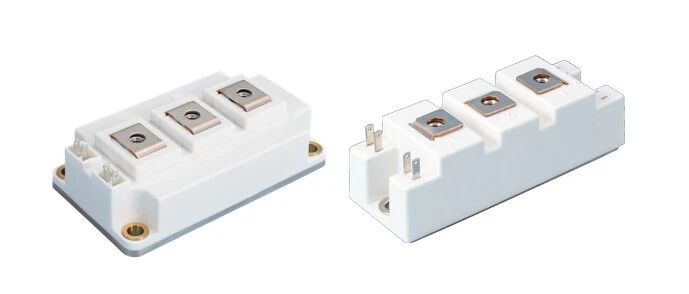
Figure 1: Jinlan L34 & L62 IGBT modules — 150A–960A, 650V–1200V, Gen7 field-stop technology.
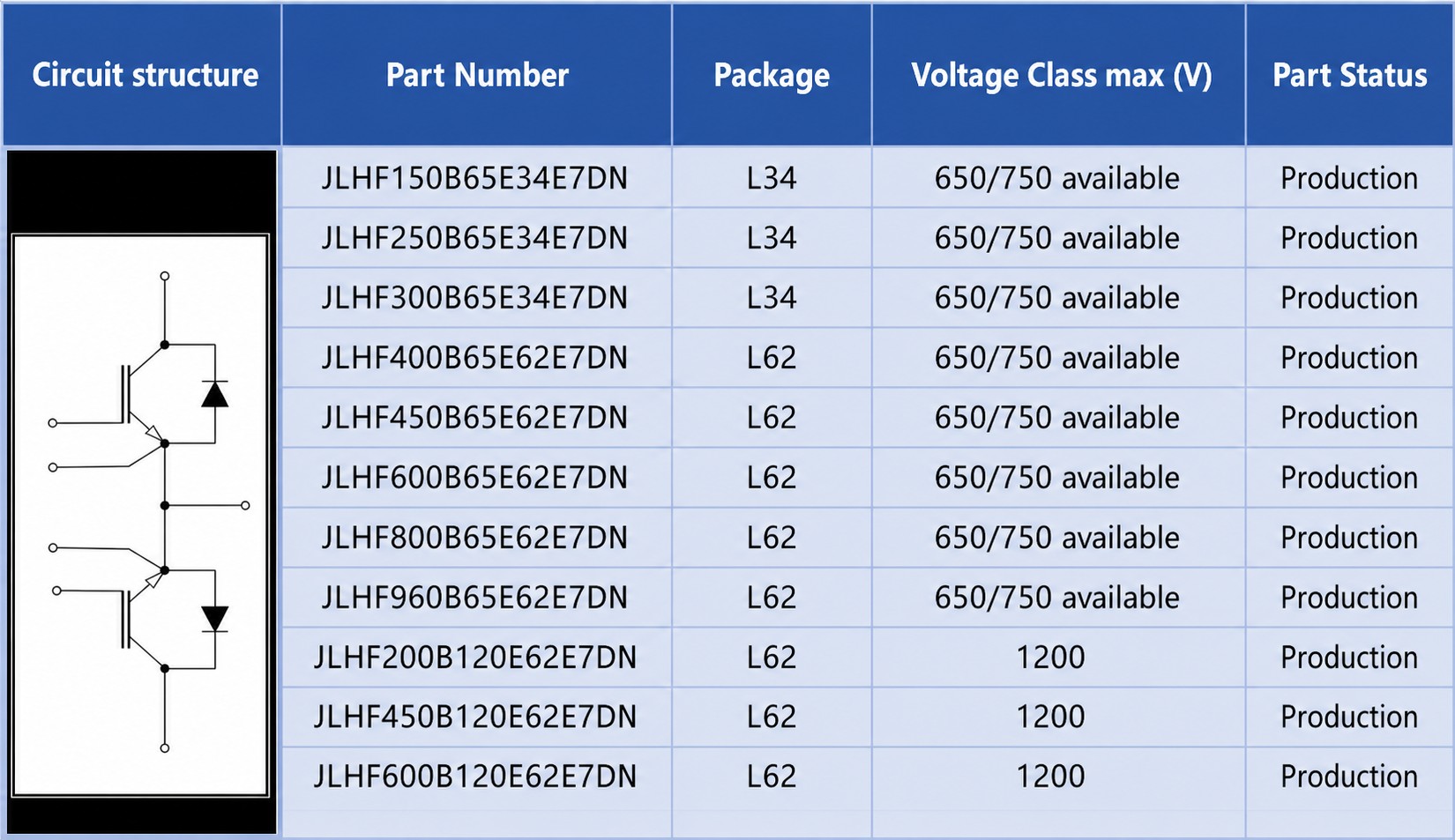
Figure 2: GB 14287.7-2025 — mandatory from Nov 2026, ≤150μs short-circuit protection.
Breaking Down GB 14287.7-2025: Three Mandatory Requirements That Reshape Module Selection
Unlike previous voluntary or industry-level guidelines, GB 14287.7-2025 is a mandatory national standard (GB prefix). Every electrical fireproof current-limiting protector sold in China after November 1, 2026 must comply. Here is what the standard demands from the power stage — and why it changes the game for module selection:
| Requirement | Standard Limit | Implication for Power Modules |
|---|---|---|
| Short-Circuit Protection Speed | Current-limiting action ≤ 150μs; total interruption ≤ 5ms | IGBT must turn off within microseconds under fault conditions — far beyond mechanical switches. Requires fast-switching Gen7 IGBT with low gate charge. |
| Overload & Thermal Performance | Must pass sustained overload tests without exceeding thermal limits | Ultra-low VCE(sat) is essential to minimize conduction losses. Even a 0.1V improvement in saturation voltage translates to measurable thermal margin gains at 300A+. |
| Electromagnetic Compatibility (EMC) | Immunity to ESD, surge, and electrical fast transient (EFT) bursts | Module layout and internal parasitic inductance directly impact EMC compliance. Optimized common-emitter topology and low-inductance packaging are non-negotiable. |
In plain engineering terms: the standard demands a module that is extremely fast, ultra-low-impedance, and capable of withstanding massive instantaneous fault currents — all while maintaining thermal composure and electromagnetic cleanliness. This is a tall order for any single power semiconductor device.
Jinlan Power Module Solution: Built from the Ground Up for GB 14287.7
Jinlan's common-emitter IGBT module portfolio directly targets the current-limiting protector application with a range spanning two package platforms and three voltage classes:
| Package | Current Range | Voltage Classes | Status | Best For |
|---|---|---|---|---|
| L34 | 150A – 300A | 650V / 750V / 1200V | Mass Production | Single-phase protectors, residential & light commercial distribution panels |
| L62 | 400A – 960A | 650V / 750V / 1200V | Mass Production | Three-phase industrial protectors, data-center PDUs, EV charging infrastructure |
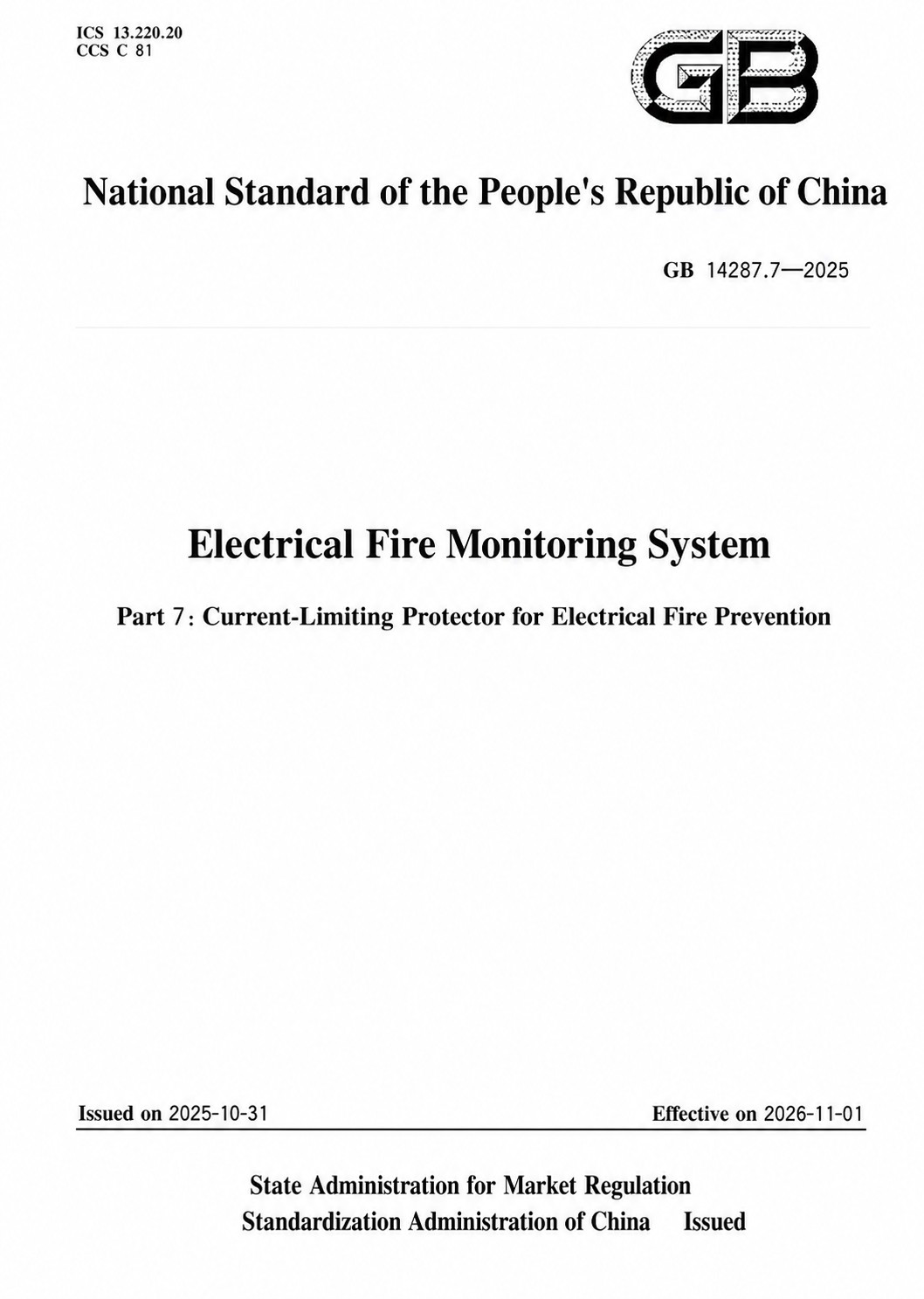
Figure 3: Jinlan IGBT module portfolio — L34 (150A–300A) and L62 (400A–960A), three voltage classes.
At the silicon level, both platforms are built on Generation 7 (Gen7) micro-trench field-stop IGBT technology, co-developed and manufactured by NCE and Jinlan, with extensive IGBT module options available. This proprietary chip platform delivers the triple advantage of fast switching speed, low saturation voltage, and robust short-circuit withstand capability — precisely the combination the new standard demands.
Five Engineering Advantages That Set Jinlan Apart
1. Gen7 Micro-Trench Field-Stop IGBT
Compared to planar-gate and earlier trench-gate generations, the Gen7 micro-trench cell structure significantly reduces both conduction and switching losses. The field-stop layer provides a sharp vertical electric-field termination, enabling thinner wafers and lower VCE(sat) without compromising breakdown voltage — a critical trade-off mastered at the device-physics level.
2. Common-Emitter Topology Optimized for Current Limiting
The common-emitter configuration is the dominant topology in current-limiting protector designs. Jinlan's module layout minimizes internal parasitic inductance, which directly improves both switching speed and EMC performance — two of the three pillars of GB 14287.7 compliance.
3. Full Industrial-Grade Reliability Validation
Every module in the L34 and L62 families has passed comprehensive industrial-grade chip-level and package-level reliability testing, including HTRB (High-Temperature Reverse Bias), HTGB (High-Temperature Gate Bias), temperature cycling, and power cycling. This is not a 'datasheet promise' — it is production-validated silicon with full reliability documentation available.
4. End-to-End Production Traceability
Jinlan's MES/ERP-integrated manufacturing flow records every process step — from wafer lot to final test — ensuring full forward and backward traceability. For protector OEMs navigating mandatory certification under GB 14287.7, this traceability data streamlines the component-level audit trail required for type-approval submissions.
5. Customization-Ready Platform
Beyond the standard L34 and L62 configurations, Jinlan supports custom module adaptations — including alternative current ratings, modified pinouts, and application-specific internal topologies — to match unique protector architectures. This is particularly valuable for OEMs designing differentiated products rather than me-too compliant designs.
Compliance Timeline: The Window Is Closing
| Milestone | Date | Action Required |
|---|---|---|
| Standard Published | October 31, 2025 | Review full standard text; identify power-stage gaps in current design |
| Jinlan Solution Validated | June 2026 | Production-ready modules available; begin prototyping and type-approval testing |
| Mandatory Enforcement | November 1, 2026 | All products on the market must be GB 14287.7 compliant |
With less than four months until enforcement, the practical engineering timeline is tight: prototyping, type-approval testing, certification body review, and production ramp-up all consume calendar time. Early engagement with a validated module supplier is the single highest-leverage decision protector OEMs can make right now.
Application Coverage: Where Jinlan Modules Deliver Compliance
| Application Segment | Typical Current Rating | Recommended Jinlan Platform | Key Compliance Driver |
|---|---|---|---|
| Residential distribution panels | 150A – 250A | L34 / 650V or 750V | Cost-sensitive; L34 offers optimal $/A ratio for single-phase |
| Commercial & light industrial | 250A – 500A | L62 / 750V | Balanced performance across protection speed and thermal headroom |
| Heavy industrial & data centers | 500A – 960A | L62 / 1200V | Maximum fault-energy handling; 1200V rating for DC-link headroom |
| EV charging infrastructure | 400A – 800A | L62 / 1200V | High DC bus voltage + frequent load transients |
FAQ: GB 14287.7 and Jinlan Module Integration
Q: How does GB 14287.7 differ from the previous fire-protection standards for low-voltage distribution?
A: Earlier standards (e.g., GB 14287 series parts 1–6) primarily addressed detection and alarming. GB 14287.7-2025 adds mandatory active current-limiting performance requirements — including quantified response-time limits (≤150μs) and interruption-time limits (≤5ms) — that directly govern the power semiconductor stage. It is a performance standard, not just a functional one.
Q: Can I use discrete IGBTs instead of a module for the power stage?
A: While technically possible for lower-current designs, discrete solutions introduce higher parasitic inductance, complicate thermal management, and add PCB layout risk for EMC compliance. At currents above ~150A — which most protector designs target — a purpose-built module like the Jinlan L34/L62 offers superior electrical and thermal performance with a simpler qualification burden. The module approach also provides the full traceability trail that certification bodies increasingly expect.
Q: What support does YQM provide for Jinlan module evaluation?
A: We provide datasheets, application notes, reference designs, and samples for the full Jinlan L34 and L62 portfolio. Our FAE team can assist with module selection, thermal simulation guidance, and EMC design review — helping you move from prototype to certified production with minimal iteration cycles.
Request Jinlan Module Samples & Compliance Design Support
●L34 & L62 Full Portfolio Available
●650V / 750V / 1200V In Stock
●Free FAE Design Review
●Fast Sample & Datasheet Delivery
Further reading: Browse our full power semiconductor portfolio or contact our engineering team for a confidential compliance readiness assessment.
GB 14287.7 Compliance: Jinlan Power Modules Pass Production Validation
Time: 2026-08-12 10:23:53
GB 14287.7-2025 Is Coming: Are Your Current-Limiting Protectors Ready?
On October 31, 2025, China's State Administration for Market Regulation and Standardization Administration officially published GB 14287.7-2025 — the mandatory national standard for Electrical Fire Monitoring Systems Part 7: Electrical Fireproof Current-Limiting Protectors. With the enforcement date of November 1, 2026 now less than four months away, every manufacturer of current-limiting protectors faces a non-negotiable compliance deadline. The component at the heart of this compliance challenge? The power semiconductor module.
The new standard raises the bar across three critical dimensions: sub-150μs short-circuit response, ultra-low conduction losses for thermal compliance, and stringent EMC immunity. Traditional power discretes and older-generation modules simply cannot meet all three simultaneously. Jinlan Power Semiconductor (Wuxi) Co., Ltd. — jointly developed with NCE (Wuxi NCE Power Co., Ltd.) — has answered this challenge with a purpose-built power module solution that has already passed full customer production validation, giving protector OEMs a proven, ready-to-deploy compliance path.
Figure 1: Jinlan L34 & L62 IGBT modules — 150A–960A, 650V–1200V, Gen7 field-stop technology.
Figure 2: GB 14287.7-2025 — mandatory from Nov 2026, ≤150μs short-circuit protection.
Breaking Down GB 14287.7-2025: Three Mandatory Requirements That Reshape Module Selection
Unlike previous voluntary or industry-level guidelines, GB 14287.7-2025 is a mandatory national standard (GB prefix). Every electrical fireproof current-limiting protector sold in China after November 1, 2026 must comply. Here is what the standard demands from the power stage — and why it changes the game for module selection:
| Requirement | Standard Limit | Implication for Power Modules |
|---|---|---|
| Short-Circuit Protection Speed | Current-limiting action ≤ 150μs; total interruption ≤ 5ms | IGBT must turn off within microseconds under fault conditions — far beyond mechanical switches. Requires fast-switching Gen7 IGBT with low gate charge. |
| Overload & Thermal Performance | Must pass sustained overload tests without exceeding thermal limits | Ultra-low VCE(sat) is essential to minimize conduction losses. Even a 0.1V improvement in saturation voltage translates to measurable thermal margin gains at 300A+. |
| Electromagnetic Compatibility (EMC) | Immunity to ESD, surge, and electrical fast transient (EFT) bursts | Module layout and internal parasitic inductance directly impact EMC compliance. Optimized common-emitter topology and low-inductance packaging are non-negotiable. |
In plain engineering terms: the standard demands a module that is extremely fast, ultra-low-impedance, and capable of withstanding massive instantaneous fault currents — all while maintaining thermal composure and electromagnetic cleanliness. This is a tall order for any single power semiconductor device.
Jinlan Power Module Solution: Built from the Ground Up for GB 14287.7
Jinlan's common-emitter IGBT module portfolio directly targets the current-limiting protector application with a range spanning two package platforms and three voltage classes:
| Package | Current Range | Voltage Classes | Status | Best For |
|---|---|---|---|---|
| L34 | 150A – 300A | 650V / 750V / 1200V | Mass Production | Single-phase protectors, residential & light commercial distribution panels |
| L62 | 400A – 960A | 650V / 750V / 1200V | Mass Production | Three-phase industrial protectors, data-center PDUs, EV charging infrastructure |
Figure 3: Jinlan IGBT module portfolio — L34 (150A–300A) and L62 (400A–960A), three voltage classes.
At the silicon level, both platforms are built on Generation 7 (Gen7) micro-trench field-stop IGBT technology, co-developed and manufactured by NCE and Jinlan, with extensive IGBT module options available. This proprietary chip platform delivers the triple advantage of fast switching speed, low saturation voltage, and robust short-circuit withstand capability — precisely the combination the new standard demands.
Five Engineering Advantages That Set Jinlan Apart
1. Gen7 Micro-Trench Field-Stop IGBT
Compared to planar-gate and earlier trench-gate generations, the Gen7 micro-trench cell structure significantly reduces both conduction and switching losses. The field-stop layer provides a sharp vertical electric-field termination, enabling thinner wafers and lower VCE(sat) without compromising breakdown voltage — a critical trade-off mastered at the device-physics level.
2. Common-Emitter Topology Optimized for Current Limiting
The common-emitter configuration is the dominant topology in current-limiting protector designs. Jinlan's module layout minimizes internal parasitic inductance, which directly improves both switching speed and EMC performance — two of the three pillars of GB 14287.7 compliance.
3. Full Industrial-Grade Reliability Validation
Every module in the L34 and L62 families has passed comprehensive industrial-grade chip-level and package-level reliability testing, including HTRB (High-Temperature Reverse Bias), HTGB (High-Temperature Gate Bias), temperature cycling, and power cycling. This is not a 'datasheet promise' — it is production-validated silicon with full reliability documentation available.
4. End-to-End Production Traceability
Jinlan's MES/ERP-integrated manufacturing flow records every process step — from wafer lot to final test — ensuring full forward and backward traceability. For protector OEMs navigating mandatory certification under GB 14287.7, this traceability data streamlines the component-level audit trail required for type-approval submissions.
5. Customization-Ready Platform
Beyond the standard L34 and L62 configurations, Jinlan supports custom module adaptations — including alternative current ratings, modified pinouts, and application-specific internal topologies — to match unique protector architectures. This is particularly valuable for OEMs designing differentiated products rather than me-too compliant designs.
Compliance Timeline: The Window Is Closing
| Milestone | Date | Action Required |
|---|---|---|
| Standard Published | October 31, 2025 | Review full standard text; identify power-stage gaps in current design |
| Jinlan Solution Validated | June 2026 | Production-ready modules available; begin prototyping and type-approval testing |
| Mandatory Enforcement | November 1, 2026 | All products on the market must be GB 14287.7 compliant |
With less than four months until enforcement, the practical engineering timeline is tight: prototyping, type-approval testing, certification body review, and production ramp-up all consume calendar time. Early engagement with a validated module supplier is the single highest-leverage decision protector OEMs can make right now.
Application Coverage: Where Jinlan Modules Deliver Compliance
| Application Segment | Typical Current Rating | Recommended Jinlan Platform | Key Compliance Driver |
|---|---|---|---|
| Residential distribution panels | 150A – 250A | L34 / 650V or 750V | Cost-sensitive; L34 offers optimal $/A ratio for single-phase |
| Commercial & light industrial | 250A – 500A | L62 / 750V | Balanced performance across protection speed and thermal headroom |
| Heavy industrial & data centers | 500A – 960A | L62 / 1200V | Maximum fault-energy handling; 1200V rating for DC-link headroom |
| EV charging infrastructure | 400A – 800A | L62 / 1200V | High DC bus voltage + frequent load transients |
FAQ: GB 14287.7 and Jinlan Module Integration
Q: How does GB 14287.7 differ from the previous fire-protection standards for low-voltage distribution?
A: Earlier standards (e.g., GB 14287 series parts 1–6) primarily addressed detection and alarming. GB 14287.7-2025 adds mandatory active current-limiting performance requirements — including quantified response-time limits (≤150μs) and interruption-time limits (≤5ms) — that directly govern the power semiconductor stage. It is a performance standard, not just a functional one.
Q: Can I use discrete IGBTs instead of a module for the power stage?
A: While technically possible for lower-current designs, discrete solutions introduce higher parasitic inductance, complicate thermal management, and add PCB layout risk for EMC compliance. At currents above ~150A — which most protector designs target — a purpose-built module like the Jinlan L34/L62 offers superior electrical and thermal performance with a simpler qualification burden. The module approach also provides the full traceability trail that certification bodies increasingly expect.
Q: What support does YQM provide for Jinlan module evaluation?
A: We provide datasheets, application notes, reference designs, and samples for the full Jinlan L34 and L62 portfolio. Our FAE team can assist with module selection, thermal simulation guidance, and EMC design review — helping you move from prototype to certified production with minimal iteration cycles.
Request Jinlan Module Samples & Compliance Design Support
●L34 & L62 Full Portfolio Available
●650V / 750V / 1200V In Stock
●Free FAE Design Review
●Fast Sample & Datasheet Delivery
Further reading: Browse our full power semiconductor portfolio or contact our engineering team for a confidential compliance readiness assessment.
Other Articles
-

Role of 32.768 kHz in Circuit Design
-
SiTime Automotive Oscillators
-
The Role of 32.768kHz in Circuits
-
Epson RTC modules solve three major pain points of ioT
-
11.0592MHz Crystal Oscillator: The "Heart" of the Computer Motherboard?
-
Examine the cost and design considerations of crystals and oscillators
-
Exploring how YXC oscillators show their skills to help with AI servers
-
Lessons from the Middle East Events — The Importance of Localization!
-
Good News: YQM won Epson's 2023 New Market Development Award !!!
-
YXC Active Differential Programmable Crystal Oscillator Supports 5G Base Station Applications


Copyright By © YQM ELECTRONICS INTL LIMITED SITEMAP
Email: sales@yqmec.com

点击右上角
分享给朋友吧


