
NDK, KDS, Murata 8MHz/12MHz/24MHz Crystals - Complete Product Guide
Time: 2026-05-22 15:11:46
In the world of digital circuits, crystal oscillators act like the 'metronome' of the heart, providing precise clock signals for CPUs, MCUs, and other chips. Without them, devices cannot operate synchronously. The common 8MHz, 12MHz, and 24MHz crystals may seem like just different numbers, but behind them lies a clever balance of power consumption, performance, and application requirements.
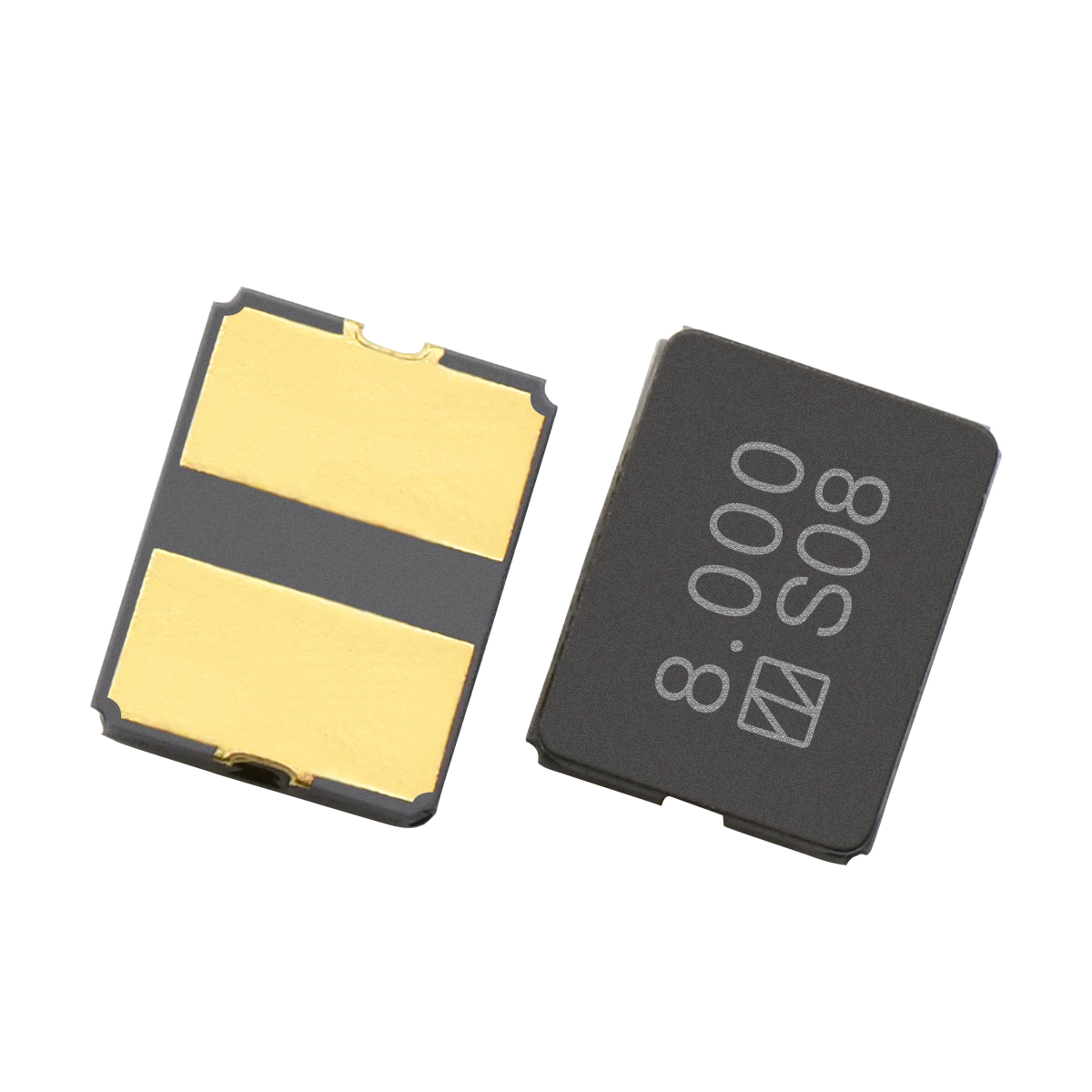
Figure 1: SMD Crystal Oscillator
8MHz: The Sweet Spot for Low Power and Classic Applications
The 8MHz crystal is commonly found in early 8051 series microcontrollers and some low-power MCUs focused on energy efficiency, such as the MSP430 series. Why 8MHz? Because many microcontrollers use a 12-clock divider (like the standard 8051), 8MHz ÷ 12 ≈ 666kHz, resulting in an instruction execution speed of approximately 0.67 MIPS (million instructions per second). This is sufficient for basic control tasks like key scanning, LED display, and temperature collection, without generating excessive power consumption.
Today, 8MHz crystals also serve as 'low-speed clocks' in low-power modes, maintaining basic timing during device sleep and switching to higher frequencies upon wake-up. For battery-powered applications, choosing the right MHz crystal can significantly extend battery life.
Popular 8MHz Crystal Models
NDK:
NX3225GD-8MHZ-STD-CRA-3 | NX5032GA-8MHZ-STD-CSK-7 | NX5032GA-8.000M-STD-CSU-1
KDS:
1C208000BC0R | 1C208000CE0H | 1C208000CE0R | 1C208000CE0Q
MURATA:
CSTLS8M00G53-A0 | CSTLS8M00G53-B0 | CSTNE8M00G520000R0 | CSTNE8M00G550000R0
12MHz: The 'Golden Frequency' for Serial Communication
The popularity of the 12MHz crystal is closely tied to serial communication. UART communication requires precise baud rates — 9600, 19200, 115200, etc. The 12MHz frequency, after simple frequency division (such as dividing by 16 or 32), can produce standard baud rates with minimal error: 12,000,000 ÷ 16 = 750,000, which can be further divided by counters to easily generate 9600 baud. In contrast, other frequencies may require complex fractional frequency dividers, leading to potential transmission errors.
Therefore, 12MHz was once the standard configuration for PC serial ports, industrial control, GPS modules, and other devices. Even though modern MCUs have built-in baud rate generators, 12MHz remains favored by many engineers due to its 'regularity' and compatibility. Explore our MHz SMD crystals for surface-mount options.
Popular 12MHz Crystal Models
NDK:
NX3225GA-12.000M-STD-CRG-2 | NX5032GA-12MHZ-STD-CSU-2 | NX5032GA-12MHZ-STD-CSK-8
KDS:
1N212000AB0AB | 1C312000BC0A
24MHz: Performance Acceleration for IoT Applications
When processing power becomes the bottleneck, the 24MHz crystal steps in. It is exactly twice 12MHz and three times 8MHz, allowing direct replacement of existing crystals to accelerate system performance (provided the MCU supports it). Today, 24MHz is the typical external clock for mainstream microcontrollers like ARM Cortex-M0/M3 (STM32, LPC series) and ESP8266/ESP32.
Higher frequency means:
- Faster Response: Medium-load tasks such as digital filtering, PID calculations, and image acquisition are handled with ease.
- Communication Protocol Support: I2C and SPI can reach clock speeds of several MHz, and Wi-Fi/Bluetooth baseband processing also relies on high-speed clocks.
- Power Balance: Compared to 48MHz or higher, 24MHz achieves a good balance between performance and current consumption (approximately 2-5mA).
Popular 24MHz Crystal Models
NDK:
NX3225GA-24MHZ-STD-CRG-2 | NX3225GA-24MHZ-STD-CRA-1
KDS:
1XTW24000MDA | 1P224000AB0V | 1XTV24000MBA | 1XTW24000FCA | 1XTW24000MDA
How to Choose the Right Frequency?
| Application Scenario | Recommended Frequency | Key Considerations |
|---|---|---|
| Battery-powered, simple control tasks | 8MHz (or even lower like 32.768kHz for RTC) | Minimize power consumption, basic timing functions |
| Serial communication (UART, Modbus) | 12MHz (or 11.0592MHz for higher precision) | Minimize baud rate error, reliable data transmission |
| IoT, sensor fusion, small embedded systems | 24MHz (or higher like 40MHz, 80MHz) | Balance performance and power, support wireless protocols |
Choosing a crystal frequency is never about 'the bigger, the better.' Instead, it's about 'tailoring' to your task requirements, power budget, and chip support. Next time you disassemble a remote control, development board, or smart socket, take a look at that tiny quartz crystal — every oscillation is precisely timing the digital world.
For more advanced timing solutions, explore our range of oscillators and discover how EPSON, SiTIME, and other leading manufacturers are pushing the boundaries of timing technology.
Need Help Selecting the Right Crystal?
Complete MHz Crystal PortfolioNDK, KDS & Murata AuthorizedFree Engineering ConsultationQuick Sample & Datasheet
Our timing experts are ready to help you select the perfect crystal for your application. Get personalized recommendations and free samples today.
Contact Our ExpertsNDK, KDS, Murata 8MHz/12MHz/24MHz Crystals - Complete Product Guide
Time: 2026-05-22 15:11:46
In the world of digital circuits, crystal oscillators act like the 'metronome' of the heart, providing precise clock signals for CPUs, MCUs, and other chips. Without them, devices cannot operate synchronously. The common 8MHz, 12MHz, and 24MHz crystals may seem like just different numbers, but behind them lies a clever balance of power consumption, performance, and application requirements.
Figure 1: SMD Crystal Oscillator
8MHz: The Sweet Spot for Low Power and Classic Applications
The 8MHz crystal is commonly found in early 8051 series microcontrollers and some low-power MCUs focused on energy efficiency, such as the MSP430 series. Why 8MHz? Because many microcontrollers use a 12-clock divider (like the standard 8051), 8MHz ÷ 12 ≈ 666kHz, resulting in an instruction execution speed of approximately 0.67 MIPS (million instructions per second). This is sufficient for basic control tasks like key scanning, LED display, and temperature collection, without generating excessive power consumption.
Today, 8MHz crystals also serve as 'low-speed clocks' in low-power modes, maintaining basic timing during device sleep and switching to higher frequencies upon wake-up. For battery-powered applications, choosing the right MHz crystal can significantly extend battery life.
Popular 8MHz Crystal Models
NDK:
NX3225GD-8MHZ-STD-CRA-3 | NX5032GA-8MHZ-STD-CSK-7 | NX5032GA-8.000M-STD-CSU-1
KDS:
1C208000BC0R | 1C208000CE0H | 1C208000CE0R | 1C208000CE0Q
MURATA:
CSTLS8M00G53-A0 | CSTLS8M00G53-B0 | CSTNE8M00G520000R0 | CSTNE8M00G550000R0
12MHz: The 'Golden Frequency' for Serial Communication
The popularity of the 12MHz crystal is closely tied to serial communication. UART communication requires precise baud rates — 9600, 19200, 115200, etc. The 12MHz frequency, after simple frequency division (such as dividing by 16 or 32), can produce standard baud rates with minimal error: 12,000,000 ÷ 16 = 750,000, which can be further divided by counters to easily generate 9600 baud. In contrast, other frequencies may require complex fractional frequency dividers, leading to potential transmission errors.
Therefore, 12MHz was once the standard configuration for PC serial ports, industrial control, GPS modules, and other devices. Even though modern MCUs have built-in baud rate generators, 12MHz remains favored by many engineers due to its 'regularity' and compatibility. Explore our MHz SMD crystals for surface-mount options.
Popular 12MHz Crystal Models
NDK:
NX3225GA-12.000M-STD-CRG-2 | NX5032GA-12MHZ-STD-CSU-2 | NX5032GA-12MHZ-STD-CSK-8
KDS:
1N212000AB0AB | 1C312000BC0A
24MHz: Performance Acceleration for IoT Applications
When processing power becomes the bottleneck, the 24MHz crystal steps in. It is exactly twice 12MHz and three times 8MHz, allowing direct replacement of existing crystals to accelerate system performance (provided the MCU supports it). Today, 24MHz is the typical external clock for mainstream microcontrollers like ARM Cortex-M0/M3 (STM32, LPC series) and ESP8266/ESP32.
Higher frequency means:
- Faster Response: Medium-load tasks such as digital filtering, PID calculations, and image acquisition are handled with ease.
- Communication Protocol Support: I2C and SPI can reach clock speeds of several MHz, and Wi-Fi/Bluetooth baseband processing also relies on high-speed clocks.
- Power Balance: Compared to 48MHz or higher, 24MHz achieves a good balance between performance and current consumption (approximately 2-5mA).
Popular 24MHz Crystal Models
NDK:
NX3225GA-24MHZ-STD-CRG-2 | NX3225GA-24MHZ-STD-CRA-1
KDS:
1XTW24000MDA | 1P224000AB0V | 1XTV24000MBA | 1XTW24000FCA | 1XTW24000MDA
How to Choose the Right Frequency?
| Application Scenario | Recommended Frequency | Key Considerations |
|---|---|---|
| Battery-powered, simple control tasks | 8MHz (or even lower like 32.768kHz for RTC) | Minimize power consumption, basic timing functions |
| Serial communication (UART, Modbus) | 12MHz (or 11.0592MHz for higher precision) | Minimize baud rate error, reliable data transmission |
| IoT, sensor fusion, small embedded systems | 24MHz (or higher like 40MHz, 80MHz) | Balance performance and power, support wireless protocols |
Choosing a crystal frequency is never about 'the bigger, the better.' Instead, it's about 'tailoring' to your task requirements, power budget, and chip support. Next time you disassemble a remote control, development board, or smart socket, take a look at that tiny quartz crystal — every oscillation is precisely timing the digital world.
For more advanced timing solutions, explore our range of oscillators and discover how EPSON, SiTIME, and other leading manufacturers are pushing the boundaries of timing technology.
Need Help Selecting the Right Crystal?
Complete MHz Crystal PortfolioNDK, KDS & Murata AuthorizedFree Engineering ConsultationQuick Sample & Datasheet
Our timing experts are ready to help you select the perfect crystal for your application. Get personalized recommendations and free samples today.
Contact Our ExpertsOther Articles
-

Epson M-G365 IMU: 6-DoF Precision for Drones & Robotics
-
YQ8563: Drop-In Low-Power RTC Replacement for NXP PCF8563
-
Industrial Robot Clocking: Why MEMS Timing Beats Quartz
-
SGT MOSFET for Robotics: Joint Motor Drive & Battery Protection
-
YQ8025T RTC: Built-in DTCXO, No Crystal — RX8025T Alternative
-
Sunlord WL-FS Wire-Wound Ferrite Inductors for Audio Lines: Purer Sound, Lower THD
-
SiTime PNT Timing Foundation: Why Precision Oscillators Define Modern Navigation
-
YXC High-Performance Timing Devices Empowering a New Experience in AI Wearables
-
NCE90N800F 900V Super-Junction MOSFET — CoolMOS Alternative
-
Epson TSX-3225C Crystal: Pin-to-Pin FA-238 Upgrade for 5G, IoT & Automotive


Copyright By © YQM ELECTRONICS INTL LIMITED SITEMAP
Email: sales@yqmec.com

点击右上角
分享给朋友吧


