
Sunlord WCX Ultra-Low-Voltage Molded Power Inductors for 800G/1.6T AI Optical Modules
Time: 2026-10-30 10:51:34
Sunlord WCX Ultra-Low-Voltage Molded Power Inductors for 800G/1.6T AI Optical Modules
AI optical modules are moving from 800G to 1.6T, and the power stage is becoming the bottleneck. A 1.6T DSP rail can demand 0.8 V at 15–20 A in a package smaller than a thumbnail, while the module housing leaves almost no room for heat spreading. Traditional power inductors struggle to deliver both high saturation current and low DCR in a 0420/0430 footprint. Sunlord's WCX series was developed for this exact problem: an ultra-low-voltage molded construction that combines high current, low loss and rugged reliability in a compact SMD package.
Explore Sunlord products, the inductor portfolio and power inductors.
1. Why 1.6T Optical Modules Need a Different Power Inductor
At 800G, a typical DSP rail may run 10–15 A; at 1.6T, the same rail can exceed 20 A during burst traffic. The inductor must hold inductance at peak current, keep DCR low to limit I²R loss, and survive repeated thermal cycling. At the same time, QSFP-DD and OSFP modules keep shrinking the PCB area around the DSP, so the inductor must fit a 0420 or 0430 case.
In practice, three requirements collide: high current, low loss and small size. A part that satisfies only one of them forces a compromise elsewhere — extra copper area, a larger heatsink, or a derated rail.
- High current: 1.6T DSP rails can reach 15–20 A, with transient peaks above the steady-state value.
- Low loss: every milliohm of DCR becomes heat inside a sealed optical module; efficiency and thermal margin depend on it.
- Small size: 0420/0430 footprints are often the only space available next to the DSP and the optical engine.
2. WCX Series: Ultra-Low-Voltage Molding for High Current in 0420/0430
WCX uses Sunlord's ultra-low-voltage molding process. Lower molding pressure protects the coil during encapsulation, reducing the risk of open/short failures associated with conventional high-pressure molding. The result is a molded inductor that combines high saturation current and low DCR in a compact 0420/0430 package.
Representative WCX parts target the 0.8 V/15–20 A DSP rails in 1.6T modules. For other inductance values and full datasheets, contact YQM.
| Model | Inductance | DCR (typ.) | Isat (typ.) | Irms (typ.) | Package |
|---|---|---|---|---|---|
| WCX0420CR10MT | 0.1 μH | 0.85 mΩ | 38 A | — | 0420 |
| WCX0430C1R0MT | 1.0 μH | 5.2 mΩ | — | 14.5 A | 0430 |
Note: “—” means the value depends on the exact ordering code and test condition. Request the full datasheet and verify Isat/Irms at your operating temperature.
3. A Complete Sunlord Passive Chain for Optical Modules
An optical module is not just one inductor. Sunlord offers a full passive chain for the power stage, laser driver and optical transceiver, so a design team can source the critical passives from one supplier and reduce qualification overhead.
- WCX / MWTP / MWTC: molded and assembled power inductors for compact, high-current rails.
- MWPH / MWPU: power inductors for laser-driver and transceiver supply rails.
- MZAH / MZOH: high-frequency beads for BIAS-T and RF isolation.
- A*Z-H2T: anti-sulfur beads for harsh, sulfur-containing environments.
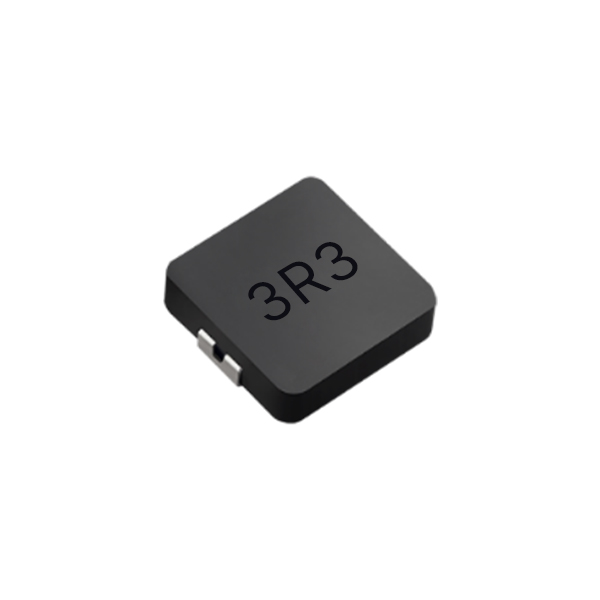
Figure 1: Sunlord molded power inductor — representative image; the exact WCX package differs. Source: YQM product library.
4. BIAS-T Filter Design: Choosing L1 and L2
In a BIAS-T network, L1 isolates the low-frequency bias from the RF path, while L2 suppresses high-frequency noise. A common starting point is a 1005/1608 ferrite bead for L1 (200 kHz–100 MHz) and a 0603 high-frequency bead for L2 (100 MHz to tens of GHz). The MZAH0603D901TF offers 1500 Ω at 700 MHz with a 20 MHz–37.4 GHz bandwidth and a current rating of at least 100 mA.
| Stage | Role | Recommended solution |
|---|---|---|
| L1 | Low-frequency bias isolation | 1005/1608 ferrite bead, 200 kHz–100 MHz |
| L2 | High-frequency noise suppression | 0603 high-frequency bead, 100 MHz–tens of GHz, Ir ≥100 mA |
| Example L2 | 700 MHz impedance | MZAH0603D901TF: 1500 Ω @700 MHz, 20 MHz–37.4 GHz |
5. Reliability in Sulfur-Rich and High-Humidity Environments
Sulfur-containing environments can cause silver migration and open-circuit failures in ordinary beads. Sunlord's anti-sulfur beads use nano ferrite and an Ag + Cu/Ni/Sn termination to block sulfur attack, supporting long-term reliability in high temperature/humidity and industrial environments. For optical modules deployed in telecom cabinets, outdoor enclosures or industrial sites, this is an important part of the passive BOM.
6. Selection Checklist for 800G/1.6T Designs
| Design requirement | Recommendation |
|---|---|
| 0.8 V/15–20 A DSP rail | WCX0420/0430; verify Isat at maximum operating temperature |
| Tight QSFP-DD/OSFP space | 0420/0430 molded package |
| Low I²R loss | DCR ≤1 mΩ for 0.1 μH; ≤6 mΩ for 1.0 μH |
| BIAS-T network | L1 1005/1608 ferrite + L2 0603 high-frequency bead |
| Sulfur / high humidity | A*Z-H2T anti-sulfur series |
| Thermal margin | Verify Irms at 85°C ambient and leave margin |
7. FAQ
Q: What is the difference between Isat and Irms?
A: Isat is the current at which inductance drops; Irms is the current that causes a specified temperature rise. Check both at the operating temperature.
Q: Can WCX replace a conventional molded inductor?
A: Compare footprint, inductance, DCR, Isat/Irms and thermal performance, then validate on your board. The 0420/0430 footprint is designed for compact optical modules.
Q: Do you have samples?
A: Yes. YQM provides samples, datasheets and FAE support for volume programs.
Q: Is WCX automotive qualified?
A: For automotive-grade requirements, contact YQM to confirm the qualified part number and documentation.
Q: How do I choose L1 and L2 for BIAS-T?
A: L1 handles low-frequency bias; L2 suppresses high-frequency noise. Use the table above as a starting point and verify with your RF team.
Get WCX Samples & Optical Module Power Support
Contact YQM ELECTRONICS for Sunlord WCX samples, full datasheets and FAE support for 800G/1.6T optical module designs.
Contact YQM Customer ServiceSunlord WCX Ultra-Low-Voltage Molded Power Inductors for 800G/1.6T AI Optical Modules
Time: 2026-10-30 10:51:34
Sunlord WCX Ultra-Low-Voltage Molded Power Inductors for 800G/1.6T AI Optical Modules
AI optical modules are moving from 800G to 1.6T, and the power stage is becoming the bottleneck. A 1.6T DSP rail can demand 0.8 V at 15–20 A in a package smaller than a thumbnail, while the module housing leaves almost no room for heat spreading. Traditional power inductors struggle to deliver both high saturation current and low DCR in a 0420/0430 footprint. Sunlord's WCX series was developed for this exact problem: an ultra-low-voltage molded construction that combines high current, low loss and rugged reliability in a compact SMD package.
Explore Sunlord products, the inductor portfolio and power inductors.
1. Why 1.6T Optical Modules Need a Different Power Inductor
At 800G, a typical DSP rail may run 10–15 A; at 1.6T, the same rail can exceed 20 A during burst traffic. The inductor must hold inductance at peak current, keep DCR low to limit I²R loss, and survive repeated thermal cycling. At the same time, QSFP-DD and OSFP modules keep shrinking the PCB area around the DSP, so the inductor must fit a 0420 or 0430 case.
In practice, three requirements collide: high current, low loss and small size. A part that satisfies only one of them forces a compromise elsewhere — extra copper area, a larger heatsink, or a derated rail.
- High current: 1.6T DSP rails can reach 15–20 A, with transient peaks above the steady-state value.
- Low loss: every milliohm of DCR becomes heat inside a sealed optical module; efficiency and thermal margin depend on it.
- Small size: 0420/0430 footprints are often the only space available next to the DSP and the optical engine.
2. WCX Series: Ultra-Low-Voltage Molding for High Current in 0420/0430
WCX uses Sunlord's ultra-low-voltage molding process. Lower molding pressure protects the coil during encapsulation, reducing the risk of open/short failures associated with conventional high-pressure molding. The result is a molded inductor that combines high saturation current and low DCR in a compact 0420/0430 package.
Representative WCX parts target the 0.8 V/15–20 A DSP rails in 1.6T modules. For other inductance values and full datasheets, contact YQM.
| Model | Inductance | DCR (typ.) | Isat (typ.) | Irms (typ.) | Package |
|---|---|---|---|---|---|
| WCX0420CR10MT | 0.1 μH | 0.85 mΩ | 38 A | — | 0420 |
| WCX0430C1R0MT | 1.0 μH | 5.2 mΩ | — | 14.5 A | 0430 |
Note: “—” means the value depends on the exact ordering code and test condition. Request the full datasheet and verify Isat/Irms at your operating temperature.
3. A Complete Sunlord Passive Chain for Optical Modules
An optical module is not just one inductor. Sunlord offers a full passive chain for the power stage, laser driver and optical transceiver, so a design team can source the critical passives from one supplier and reduce qualification overhead.
- WCX / MWTP / MWTC: molded and assembled power inductors for compact, high-current rails.
- MWPH / MWPU: power inductors for laser-driver and transceiver supply rails.
- MZAH / MZOH: high-frequency beads for BIAS-T and RF isolation.
- A*Z-H2T: anti-sulfur beads for harsh, sulfur-containing environments.
Figure 1: Sunlord molded power inductor — representative image; the exact WCX package differs. Source: YQM product library.
4. BIAS-T Filter Design: Choosing L1 and L2
In a BIAS-T network, L1 isolates the low-frequency bias from the RF path, while L2 suppresses high-frequency noise. A common starting point is a 1005/1608 ferrite bead for L1 (200 kHz–100 MHz) and a 0603 high-frequency bead for L2 (100 MHz to tens of GHz). The MZAH0603D901TF offers 1500 Ω at 700 MHz with a 20 MHz–37.4 GHz bandwidth and a current rating of at least 100 mA.
| Stage | Role | Recommended solution |
|---|---|---|
| L1 | Low-frequency bias isolation | 1005/1608 ferrite bead, 200 kHz–100 MHz |
| L2 | High-frequency noise suppression | 0603 high-frequency bead, 100 MHz–tens of GHz, Ir ≥100 mA |
| Example L2 | 700 MHz impedance | MZAH0603D901TF: 1500 Ω @700 MHz, 20 MHz–37.4 GHz |
5. Reliability in Sulfur-Rich and High-Humidity Environments
Sulfur-containing environments can cause silver migration and open-circuit failures in ordinary beads. Sunlord's anti-sulfur beads use nano ferrite and an Ag + Cu/Ni/Sn termination to block sulfur attack, supporting long-term reliability in high temperature/humidity and industrial environments. For optical modules deployed in telecom cabinets, outdoor enclosures or industrial sites, this is an important part of the passive BOM.
6. Selection Checklist for 800G/1.6T Designs
| Design requirement | Recommendation |
|---|---|
| 0.8 V/15–20 A DSP rail | WCX0420/0430; verify Isat at maximum operating temperature |
| Tight QSFP-DD/OSFP space | 0420/0430 molded package |
| Low I²R loss | DCR ≤1 mΩ for 0.1 μH; ≤6 mΩ for 1.0 μH |
| BIAS-T network | L1 1005/1608 ferrite + L2 0603 high-frequency bead |
| Sulfur / high humidity | A*Z-H2T anti-sulfur series |
| Thermal margin | Verify Irms at 85°C ambient and leave margin |
7. FAQ
Q: What is the difference between Isat and Irms?
A: Isat is the current at which inductance drops; Irms is the current that causes a specified temperature rise. Check both at the operating temperature.
Q: Can WCX replace a conventional molded inductor?
A: Compare footprint, inductance, DCR, Isat/Irms and thermal performance, then validate on your board. The 0420/0430 footprint is designed for compact optical modules.
Q: Do you have samples?
A: Yes. YQM provides samples, datasheets and FAE support for volume programs.
Q: Is WCX automotive qualified?
A: For automotive-grade requirements, contact YQM to confirm the qualified part number and documentation.
Q: How do I choose L1 and L2 for BIAS-T?
A: L1 handles low-frequency bias; L2 suppresses high-frequency noise. Use the table above as a starting point and verify with your RF team.
Get WCX Samples & Optical Module Power Support
Contact YQM ELECTRONICS for Sunlord WCX samples, full datasheets and FAE support for 800G/1.6T optical module designs.
Contact YQM Customer ServiceOther Articles
-

Sunlord WCX Ultra-Low-Voltage Molded Power Inductors for 800G/1.6T AI Optical Modules
-
SiTime MEMS Timing for Aerospace & Defense: Precision PNT in Extreme Environments
-
YQ8563: Drop-In Low-Power RTC Replacement for NXP PCF8563
-
Epson M-G365 IMU: 6-DoF Precision for Drones & Robotics
-
YQ8025T RTC: Built-in DTCXO, No Crystal — RX8025T Alternative
-
Sunlord WL-FS Wire-Wound Ferrite Inductors for Audio Lines: Purer Sound, Lower THD
-
SGT MOSFET for Robotics: Joint Motor Drive & Battery Protection
-
Industrial Robot Clocking: Why MEMS Timing Beats Quartz
-
SiTime PNT Timing Foundation: Why Precision Oscillators Define Modern Navigation
-
YXC High-Performance Timing Devices Empowering a New Experience in AI Wearables


Copyright By © YQM ELECTRONICS INTL LIMITED SITEMAP
Email: sales@yqmec.com

点击右上角
分享给朋友吧


