
Sunlord WL-FS Wire-Wound Ferrite Inductors for Audio Lines: Purer Sound, Lower THD
Time: 2026-09-29 15:50:15
Every smartphone board is a battle for space — and audio is usually the first casualty. To stay compatible with 2G, 3G and 4G networks, handsets must run multi-band, multi-mode RF front-ends on shrinking PCBs, which lets RF noise creep onto the audio lines and distort the voice signal. The cure is a filter component with high impedance across the cellular bands — but speaker lines carry 300–500 mA of drive current, so the filter must also survive real load conditions. YQM ELECTRONICS brings Sunlord's answer — the WL-FS wire-wound ferrite inductor series — to design teams worldwide.
1. What an Audio-Line Filter Component Must Deliver
Based on where the noise comes from and how audio lines behave, a filter component for the audio path has to meet four requirements at once:
- High impedance at high frequencies, covering the phone's communication bands as broadly as possible;
- Current capability up to 500 mA for speaker drive, with low DCR and electrical performance that holds under load;
- Small size, keeping the whole circuit miniaturized;
- Low THD (Total Harmonic Distortion) to protect audio quality.
Ferrite beads are the traditional choice, but their impedance collapses past 1 GHz and their inductance sags under DC bias. Sunlord developed the WL-FS wire-wound ferrite inductor specifically to break those trade-offs: compared with a bead of similar impedance, it keeps rising impedance at high frequencies, offers lower DCR, holds its inductance far better under bias current, saturates later — and distorts the audio far less.
2. Impedance That Keeps Climbing Past 1 GHz
Take the WL1005FSR10JTF versus the HZ1005D301TF ferrite bead — two parts with closely matched impedance at 1 GHz. As frequency climbs beyond 1 GHz, the HZ bead's impedance falls off, while the WL-FS inductor's impedance keeps rising, staying above the bead across the entire 1–3 GHz range — exactly where LTE, Wi-Fi and Bluetooth noise lives. And while the bead needs roughly 1 Ω of DCR to reach that impedance, the WL1005FSR10JTF does it with just 0.116 Ω — less voltage drop, less heat, longer battery life.
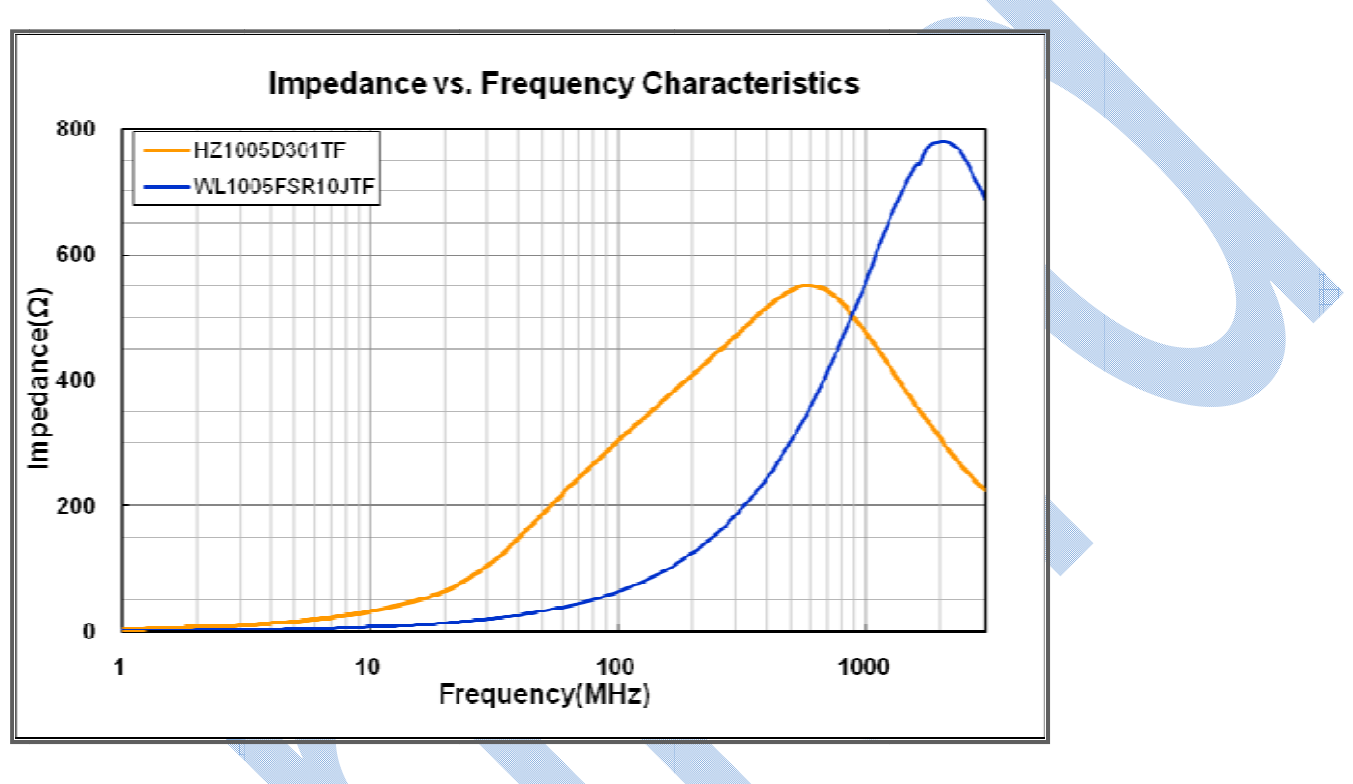
Figure 1: Impedance vs. frequency — past 1 GHz the HZ bead rolls off while the WL-FS inductor keeps climbing and stays higher across the full 1–3 GHz band.
3. Inductance That Survives DC Bias
Audio filter parts must carry 300–500 mA of DC current in normal operation. Under a 900 mA worst-case bias test, the WL1005FSR10JTF holds its inductance essentially unchanged, while the HZ1005D301TF bead loses a large share of its inductance the moment bias is applied — which shifts the filter's effective impedance and lets noise through when the speaker actually plays.
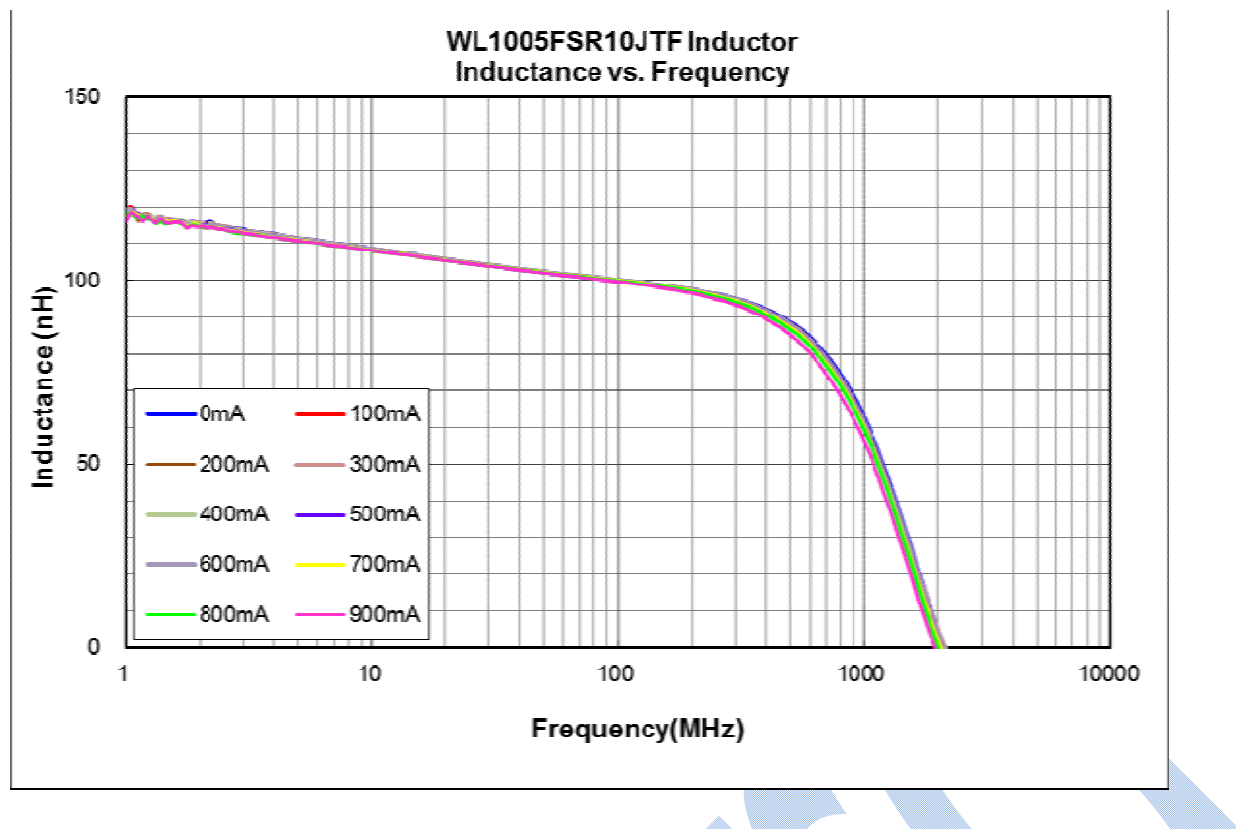
Figure 2: WL-FS under DC bias — inductance stays stable with up to 900 mA applied, so filtering performance does not move under load.
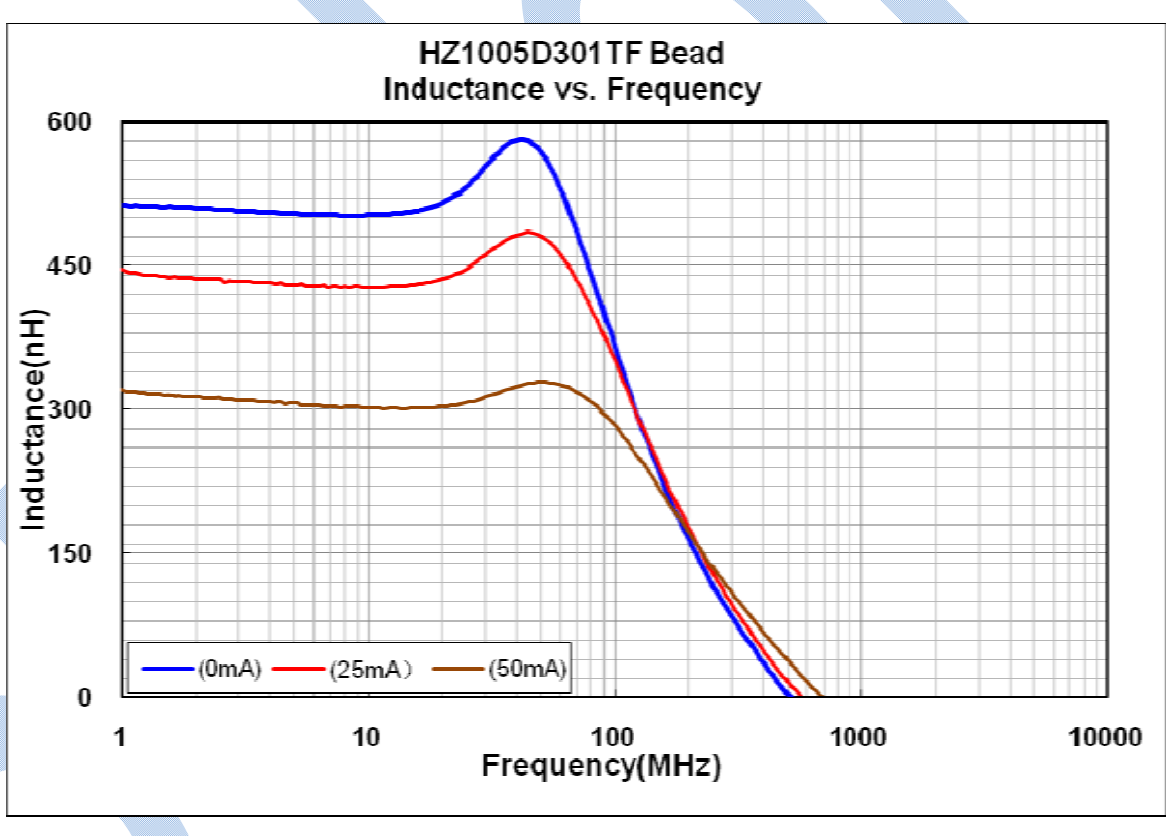
Figure 3: HZ bead under DC bias — inductance drops sharply once bias current is applied, shifting the noise-filtering characteristic.
4. THD: The Difference You Can Hear
THD (Total Harmonic Distortion) measures all the harmonic content a component adds to the signal path — and in audio, it decides how pure the voice sounds. At the same package size and similar 1 GHz impedance, the WL-FS wire-wound ferrite inductor measures around -100 dB THD, versus -82 dB for the HZ1005D301TF bead. That 18 dB margin means the filter itself adds almost nothing to the signal, leaving the audio path cleaner for the codec, the speaker and the user's ear.
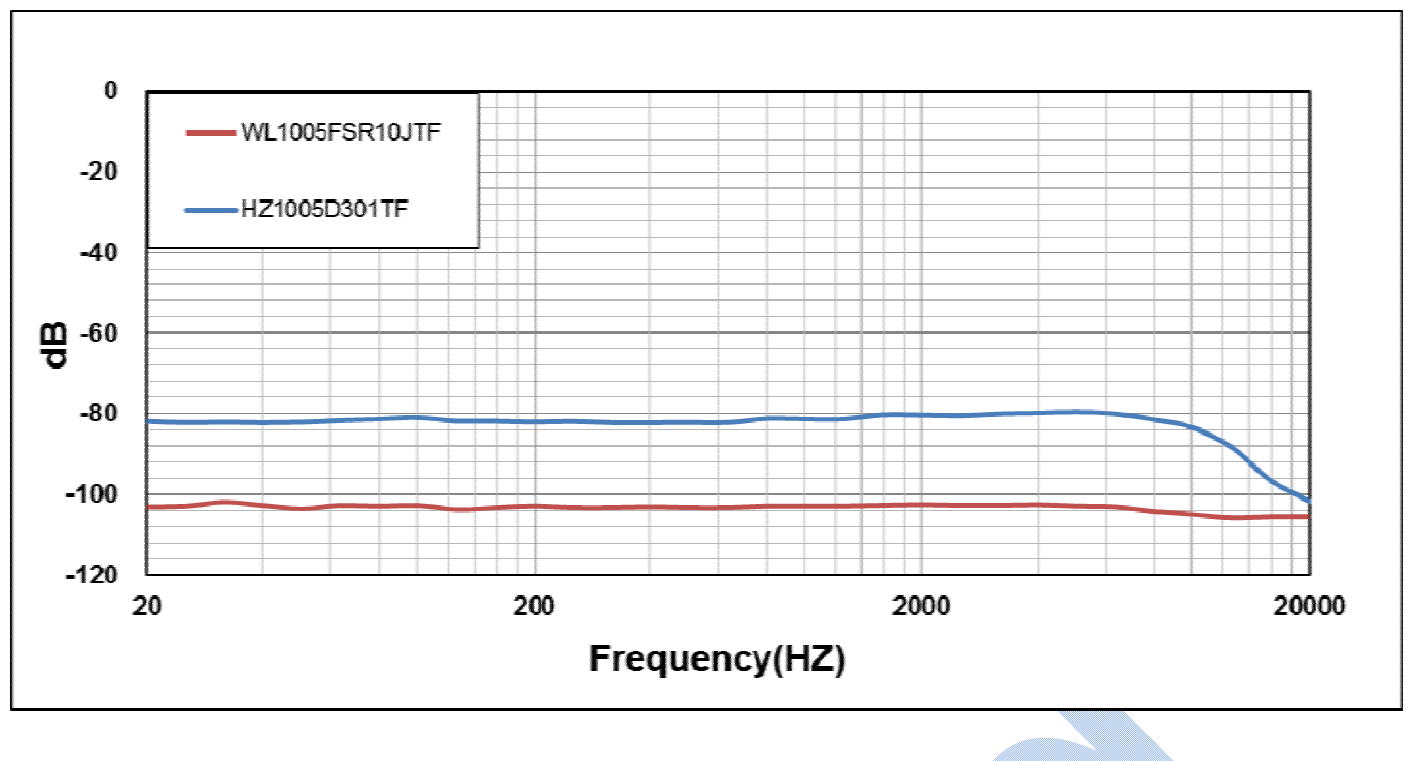
Figure 4: THD comparison — WL-FS sits around -100 dB versus -82 dB for the HZ1005D301TF bead at the same size and similar impedance.
5. WL-FS Product Information
The series ships in two compact footprints, WL1005FS (0402 metric) and WL1608FS (0603 metric), both in mass production:
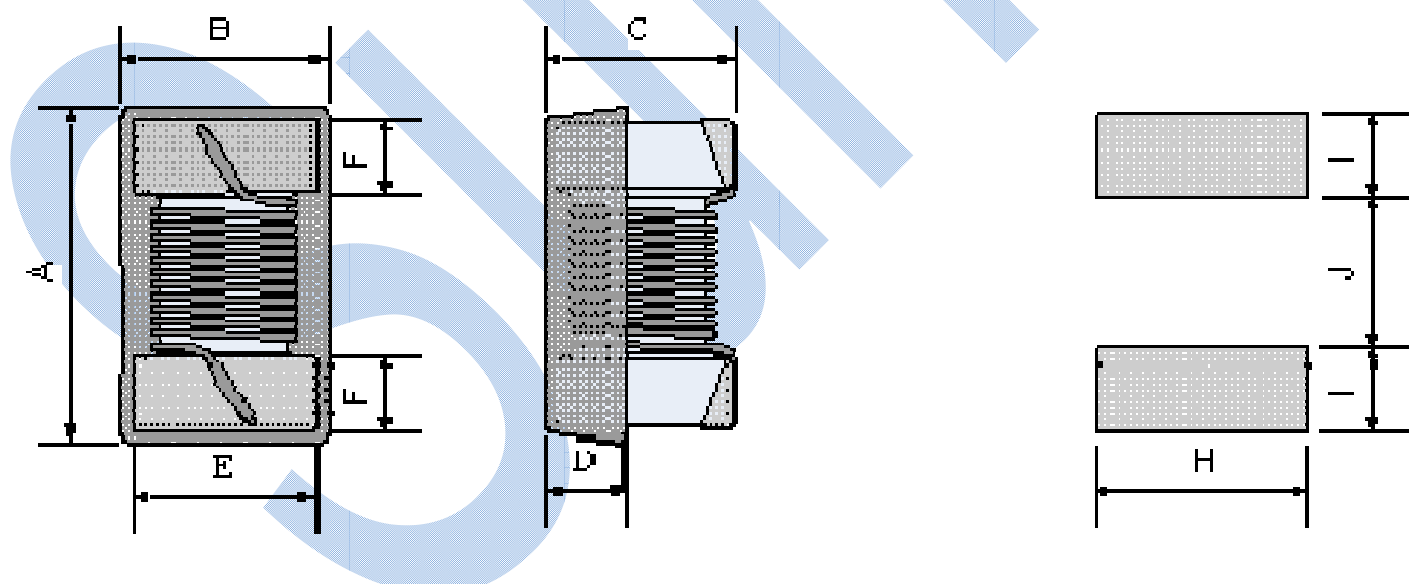
Figure 5: WL-FS outline dimensions — WL1005FS and WL1608FS package drawings with full dimension table.
| Series | A | B | C | D Typ. | E | F | H Typ. | I Typ. | J Typ. |
|---|---|---|---|---|---|---|---|---|---|
| WL1005FS | 1.1±0.1 | 0.60±0.1 | 0.55±0.1 | 0.25 | 0.5±0.1 | 0.2±0.1 | 0.65 | 0.35 | 0.50 |
| WL1608FS | 1.7±0.2 | 1.05±0.2 | 0.8±0.2 | 0.38 | 0.76±0.1 | 0.3±0.1 | 1.02 | 0.64 | 0.64 |
Electrical specifications (Table 1):
| Part Number | Inductance | Tolerance | L Test Freq. | Max. DC Resistance | Max. Rated Current | Min. Self-resonant Frequency |
|---|---|---|---|---|---|---|
| WL1005FS | 20–560 nH | ±5, 10, 20% | 7.9 MHz | 0.05–0.92 Ω | 1600–200 mA | 2600–600 MHz |
| WL1608FS | 47–22000 nH | ±5, 10, 20% | 7.9 MHz | 0.06–11.40 Ω | 1200–70 mA | 2350–20 MHz |
6. Beyond Audio: NFC Matching Networks
Thanks to tight inductance tolerance, low DCR and high Q (low loss), the WL-FS series also fits NFC antenna filtering and matching. For the NXP PN548 NFC chip, for example, the recommended filter inductance range is 160–560 nH, with 160 nH the most common choice. Sunlord recommends the WL1608FSR16JTFY01: 160 nH, ±5% tolerance, 600 mA rated current, 0.21 Ω RDC, and Q greater than 25 up to 20 MHz.
Conclusion: The Highest-Performance Answer for Mobile Audio Noise
Smaller DCR, better high-frequency impedance, superior inductance stability under DC bias, and lower THD — the WL-FS wire-wound ferrite inductor checks every box an audio-line filter needs, and it is already in mass production. It is the highest-performance solution for stripping high-frequency noise out of smartphone audio lines. Browse the full inductor catalog or the Sunlord product lineup to compare WL-FS variants for your next handset design.
Need RF-side support too? Check our RF component range for matching and filtering parts, or follow product news for new Sunlord releases.
Need WL-FS Samples for Your Audio Design?
●WL1005FS / WL1608FS Series
●0.116Ω Low-DCR Lineup
●-100dB THD Performance
●Datasheet & Samples in 24h
Sunlord WL-FS Wire-Wound Ferrite Inductors for Audio Lines: Purer Sound, Lower THD
Time: 2026-09-29 15:50:15
Every smartphone board is a battle for space — and audio is usually the first casualty. To stay compatible with 2G, 3G and 4G networks, handsets must run multi-band, multi-mode RF front-ends on shrinking PCBs, which lets RF noise creep onto the audio lines and distort the voice signal. The cure is a filter component with high impedance across the cellular bands — but speaker lines carry 300–500 mA of drive current, so the filter must also survive real load conditions. YQM ELECTRONICS brings Sunlord's answer — the WL-FS wire-wound ferrite inductor series — to design teams worldwide.
1. What an Audio-Line Filter Component Must Deliver
Based on where the noise comes from and how audio lines behave, a filter component for the audio path has to meet four requirements at once:
- High impedance at high frequencies, covering the phone's communication bands as broadly as possible;
- Current capability up to 500 mA for speaker drive, with low DCR and electrical performance that holds under load;
- Small size, keeping the whole circuit miniaturized;
- Low THD (Total Harmonic Distortion) to protect audio quality.
Ferrite beads are the traditional choice, but their impedance collapses past 1 GHz and their inductance sags under DC bias. Sunlord developed the WL-FS wire-wound ferrite inductor specifically to break those trade-offs: compared with a bead of similar impedance, it keeps rising impedance at high frequencies, offers lower DCR, holds its inductance far better under bias current, saturates later — and distorts the audio far less.
2. Impedance That Keeps Climbing Past 1 GHz
Take the WL1005FSR10JTF versus the HZ1005D301TF ferrite bead — two parts with closely matched impedance at 1 GHz. As frequency climbs beyond 1 GHz, the HZ bead's impedance falls off, while the WL-FS inductor's impedance keeps rising, staying above the bead across the entire 1–3 GHz range — exactly where LTE, Wi-Fi and Bluetooth noise lives. And while the bead needs roughly 1 Ω of DCR to reach that impedance, the WL1005FSR10JTF does it with just 0.116 Ω — less voltage drop, less heat, longer battery life.
Figure 1: Impedance vs. frequency — past 1 GHz the HZ bead rolls off while the WL-FS inductor keeps climbing and stays higher across the full 1–3 GHz band.
3. Inductance That Survives DC Bias
Audio filter parts must carry 300–500 mA of DC current in normal operation. Under a 900 mA worst-case bias test, the WL1005FSR10JTF holds its inductance essentially unchanged, while the HZ1005D301TF bead loses a large share of its inductance the moment bias is applied — which shifts the filter's effective impedance and lets noise through when the speaker actually plays.
Figure 2: WL-FS under DC bias — inductance stays stable with up to 900 mA applied, so filtering performance does not move under load.
Figure 3: HZ bead under DC bias — inductance drops sharply once bias current is applied, shifting the noise-filtering characteristic.
4. THD: The Difference You Can Hear
THD (Total Harmonic Distortion) measures all the harmonic content a component adds to the signal path — and in audio, it decides how pure the voice sounds. At the same package size and similar 1 GHz impedance, the WL-FS wire-wound ferrite inductor measures around -100 dB THD, versus -82 dB for the HZ1005D301TF bead. That 18 dB margin means the filter itself adds almost nothing to the signal, leaving the audio path cleaner for the codec, the speaker and the user's ear.
Figure 4: THD comparison — WL-FS sits around -100 dB versus -82 dB for the HZ1005D301TF bead at the same size and similar impedance.
5. WL-FS Product Information
The series ships in two compact footprints, WL1005FS (0402 metric) and WL1608FS (0603 metric), both in mass production:
Figure 5: WL-FS outline dimensions — WL1005FS and WL1608FS package drawings with full dimension table.
| Series | A | B | C | D Typ. | E | F | H Typ. | I Typ. | J Typ. |
|---|---|---|---|---|---|---|---|---|---|
| WL1005FS | 1.1±0.1 | 0.60±0.1 | 0.55±0.1 | 0.25 | 0.5±0.1 | 0.2±0.1 | 0.65 | 0.35 | 0.50 |
| WL1608FS | 1.7±0.2 | 1.05±0.2 | 0.8±0.2 | 0.38 | 0.76±0.1 | 0.3±0.1 | 1.02 | 0.64 | 0.64 |
Electrical specifications (Table 1):
| Part Number | Inductance | Tolerance | L Test Freq. | Max. DC Resistance | Max. Rated Current | Min. Self-resonant Frequency |
|---|---|---|---|---|---|---|
| WL1005FS | 20–560 nH | ±5, 10, 20% | 7.9 MHz | 0.05–0.92 Ω | 1600–200 mA | 2600–600 MHz |
| WL1608FS | 47–22000 nH | ±5, 10, 20% | 7.9 MHz | 0.06–11.40 Ω | 1200–70 mA | 2350–20 MHz |
6. Beyond Audio: NFC Matching Networks
Thanks to tight inductance tolerance, low DCR and high Q (low loss), the WL-FS series also fits NFC antenna filtering and matching. For the NXP PN548 NFC chip, for example, the recommended filter inductance range is 160–560 nH, with 160 nH the most common choice. Sunlord recommends the WL1608FSR16JTFY01: 160 nH, ±5% tolerance, 600 mA rated current, 0.21 Ω RDC, and Q greater than 25 up to 20 MHz.
Conclusion: The Highest-Performance Answer for Mobile Audio Noise
Smaller DCR, better high-frequency impedance, superior inductance stability under DC bias, and lower THD — the WL-FS wire-wound ferrite inductor checks every box an audio-line filter needs, and it is already in mass production. It is the highest-performance solution for stripping high-frequency noise out of smartphone audio lines. Browse the full inductor catalog or the Sunlord product lineup to compare WL-FS variants for your next handset design.
Need RF-side support too? Check our RF component range for matching and filtering parts, or follow product news for new Sunlord releases.
Need WL-FS Samples for Your Audio Design?
●WL1005FS / WL1608FS Series
●0.116Ω Low-DCR Lineup
●-100dB THD Performance
●Datasheet & Samples in 24h
Other Articles
-

Role of 32.768 kHz in Circuit Design
-
SiTime Automotive Oscillators
-
The Role of 32.768kHz in Circuits
-
11.0592MHz Crystal Oscillator: The "Heart" of the Computer Motherboard?
-
Epson RTC modules solve three major pain points of ioT
-
Examine the cost and design considerations of crystals and oscillators
-
Exploring how YXC oscillators show their skills to help with AI servers
-
Lessons from the Middle East Events — The Importance of Localization!
-
YXC Active Differential Programmable Crystal Oscillator Supports 5G Base Station Applications
-
Good News: YQM won Epson's 2023 New Market Development Award !!!


Copyright By © YQM ELECTRONICS INTL LIMITED SITEMAP
Email: sales@yqmec.com

点击右上角
分享给朋友吧


