
SiT9505 Differential Oscillator: 41 fs Jitter MEMS Clock for 100G–1.6T Optical Modules
Time: 2026-07-09 17:22:16
SiT9505: Redefining the Clock Backbone for High-Speed Communications
When femtosecond-level jitter becomes the bottleneck, what safeguards your data integrity?
In 100G, 200G, 400G, 800G, and emerging 1.6T-and-beyond optical transceivers, high-speed data center switches, and hyperscale computing platforms, reference clock quality directly dictates link BER and effective throughput. Conventional quartz-based oscillators struggle to meet tightening jitter budgets at these data rates, while frequency wander induced by mechanical vibration becomes a silent threat — causing packet loss that undermines system availability. The SiTime SiT9505 family of differential oscillators was purpose-built to resolve precisely these challenges, combining MEMS-based precision with field-proven robustness.
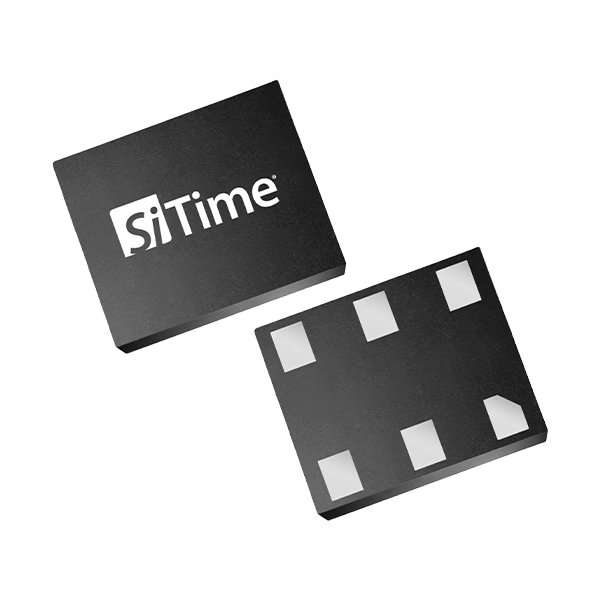
Figure 1: SiT9505 MEMS differential oscillator — delivering 41 fs RMS phase jitter in industry-standard 2016, 2520, and 3225 SMD packages, purpose-built for 100G–1.6T optical module and data center SerDes reference clocking.
1. Three Core Advantages Redefining Differential Clock Performance
Advantage 1: 41 fs RMS Phase Jitter — Extreme Timing Precision for High-Speed Links
The SiT9505 series leverages SiTime's advanced MEMS clocking technology to achieve a typical 41 fs RMS phase jitter (integrated over 12 kHz to 20 MHz). At this performance level, the timing uncertainty of each clock edge is compressed to the femtosecond domain — across all standard reference frequencies including 50 MHz, 100 MHz, 156.25 MHz, 315.5 MHz, and 625 MHz. For SerDes lanes driving 100G through 1.6T optical modules and high-speed switch fabrics, this translates into wider eye openings, lower BER, and greater margin against channel loss — effectively making SiT9505 the 'timing heartbeat' that high-bandwidth links can depend on.
Advantage 2: Universal 2016, 2520 & 3225 Footprints — Compact Without Compromise
Available in industry-standard 2.0 mm × 1.6 mm, 2.5 mm × 2.0 mm, and 3.2 mm × 2.5 mm SMD packages, the SiT9505 delivers top-tier jitter performance within the exact form factors already designed into today's optical transceivers, high-speed NICs, and dense switch boards. Engineers no longer need to sacrifice PCB real estate for low jitter, nor wrestle with footprint incompatibility when migrating from legacy quartz oscillators. This pin-compatible design path accelerates the transition from prototype to volume production, letting teams lock in both signal integrity and layout continuity from day one.
Advantage 3: 20× Better Anti-Vibration — Rock-Solid Clocking in Hostile Environments
Quartz resonators are inherently sensitive to mechanical vibration — even micro-perturbations can induce frequency modulation that cascades into BER degradation across high-speed serial links. SiT9505, capitalizing on the intrinsic benefits of SiTime MEMS technology, achieves a 20× improvement in anti-vibration performance over traditional quartz-based designs. Whether it's cooling fan vibration inside server racks, ambient machinery rumble on factory floors, or mechanical shock during optical module hot-plug events, the device maintains stable frequency output — drastically cutting vibration-induced packet loss and ensuring 24/7 system reliability. For engineers seeking ruggedized oscillators that thrive under mechanical stress, SiT9505 sets a new benchmark.
2. Addressing Two Critical Industry Pain Points
Pain Point 1: The Relentless Demand for Timing Precision in High-Speed Communications
Inside every 100G/200G/400G/800G-and-beyond optical module, data center switch, and high-performance server platform, the SerDes clocking chain imposes exceptionally tight jitter tolerance. Every additional femtosecond of clock jitter can be amplified by the data rate into measurable BER degradation — eating into the link budget that system architects fought hard to preserve. SiT9505, with its 41 fs typical phase jitter, provides a field-validated timing reference that has already been qualified in volume production programs at major networking OEMs. As the industry's go-to low jitter oscillator for next-generation optical interconnects, it has earned its place as the trusted 'time heart' inside high-speed communication links.
Pain Point 2: Vibration-Induced Packet Loss in Dense Deployments
Data centers, telecom central offices, and industrial communication installations subject equipment to persistent mechanical stress — fan-induced chassis vibration, rack-level resonance, and even transportation shock during deployment. Under these conditions, quartz oscillators routinely exhibit frequency drift and phase noise degradation, triggering link retrains, packet loss, and throughput collapse. The SiT9505's 20× anti-vibration advantage suppresses vibration-to-phase-noise coupling at the source, effectively neutralizing a leading root cause of field reliability issues. For system architects deploying ruggedized timing solutions, this translates into fewer field returns and demonstrably higher network availability.
3. Conclusion: Precision Timing That Scales With Your Data Rate
The SiT9505 is far more than another differential oscillator — it represents SiTime's decisive answer to the escalating clocking demands of high-speed communications. With 41 fs ultra-low jitter defining the upper bound of timing precision, 2016/2520/3225 universal packages preserving design compatibility, and a 20× anti-vibration margin conquering environmental reliability challenges, SiT9505 is purpose-built for the optical interconnect roadmap — from today's 400G/800G deployments to tomorrow's 1.6T and 3.2T frontiers. Whether prototyping next-generation transceivers or scaling data center fabric to millions of lanes, SiTime's SiT9505 series is the clock reference you can build on.
SiT9505 — Every bit arrives, anchored by the precision of femtosecond-clock discipline.
Request SiT9505 Samples & Technical Datasheet
●41 fs Ultra-Low Jitter
●2016/2520/3225 Packages
●20× Anti-Vibration
●Free Technical Consultation
SiT9505 Differential Oscillator: 41 fs Jitter MEMS Clock for 100G–1.6T Optical Modules
Time: 2026-07-09 17:22:16
SiT9505: Redefining the Clock Backbone for High-Speed Communications
When femtosecond-level jitter becomes the bottleneck, what safeguards your data integrity?
In 100G, 200G, 400G, 800G, and emerging 1.6T-and-beyond optical transceivers, high-speed data center switches, and hyperscale computing platforms, reference clock quality directly dictates link BER and effective throughput. Conventional quartz-based oscillators struggle to meet tightening jitter budgets at these data rates, while frequency wander induced by mechanical vibration becomes a silent threat — causing packet loss that undermines system availability. The SiTime SiT9505 family of differential oscillators was purpose-built to resolve precisely these challenges, combining MEMS-based precision with field-proven robustness.
Figure 1: SiT9505 MEMS differential oscillator — delivering 41 fs RMS phase jitter in industry-standard 2016, 2520, and 3225 SMD packages, purpose-built for 100G–1.6T optical module and data center SerDes reference clocking.
1. Three Core Advantages Redefining Differential Clock Performance
Advantage 1: 41 fs RMS Phase Jitter — Extreme Timing Precision for High-Speed Links
The SiT9505 series leverages SiTime's advanced MEMS clocking technology to achieve a typical 41 fs RMS phase jitter (integrated over 12 kHz to 20 MHz). At this performance level, the timing uncertainty of each clock edge is compressed to the femtosecond domain — across all standard reference frequencies including 50 MHz, 100 MHz, 156.25 MHz, 315.5 MHz, and 625 MHz. For SerDes lanes driving 100G through 1.6T optical modules and high-speed switch fabrics, this translates into wider eye openings, lower BER, and greater margin against channel loss — effectively making SiT9505 the 'timing heartbeat' that high-bandwidth links can depend on.
Advantage 2: Universal 2016, 2520 & 3225 Footprints — Compact Without Compromise
Available in industry-standard 2.0 mm × 1.6 mm, 2.5 mm × 2.0 mm, and 3.2 mm × 2.5 mm SMD packages, the SiT9505 delivers top-tier jitter performance within the exact form factors already designed into today's optical transceivers, high-speed NICs, and dense switch boards. Engineers no longer need to sacrifice PCB real estate for low jitter, nor wrestle with footprint incompatibility when migrating from legacy quartz oscillators. This pin-compatible design path accelerates the transition from prototype to volume production, letting teams lock in both signal integrity and layout continuity from day one.
Advantage 3: 20× Better Anti-Vibration — Rock-Solid Clocking in Hostile Environments
Quartz resonators are inherently sensitive to mechanical vibration — even micro-perturbations can induce frequency modulation that cascades into BER degradation across high-speed serial links. SiT9505, capitalizing on the intrinsic benefits of SiTime MEMS technology, achieves a 20× improvement in anti-vibration performance over traditional quartz-based designs. Whether it's cooling fan vibration inside server racks, ambient machinery rumble on factory floors, or mechanical shock during optical module hot-plug events, the device maintains stable frequency output — drastically cutting vibration-induced packet loss and ensuring 24/7 system reliability. For engineers seeking ruggedized oscillators that thrive under mechanical stress, SiT9505 sets a new benchmark.
2. Addressing Two Critical Industry Pain Points
Pain Point 1: The Relentless Demand for Timing Precision in High-Speed Communications
Inside every 100G/200G/400G/800G-and-beyond optical module, data center switch, and high-performance server platform, the SerDes clocking chain imposes exceptionally tight jitter tolerance. Every additional femtosecond of clock jitter can be amplified by the data rate into measurable BER degradation — eating into the link budget that system architects fought hard to preserve. SiT9505, with its 41 fs typical phase jitter, provides a field-validated timing reference that has already been qualified in volume production programs at major networking OEMs. As the industry's go-to low jitter oscillator for next-generation optical interconnects, it has earned its place as the trusted 'time heart' inside high-speed communication links.
Pain Point 2: Vibration-Induced Packet Loss in Dense Deployments
Data centers, telecom central offices, and industrial communication installations subject equipment to persistent mechanical stress — fan-induced chassis vibration, rack-level resonance, and even transportation shock during deployment. Under these conditions, quartz oscillators routinely exhibit frequency drift and phase noise degradation, triggering link retrains, packet loss, and throughput collapse. The SiT9505's 20× anti-vibration advantage suppresses vibration-to-phase-noise coupling at the source, effectively neutralizing a leading root cause of field reliability issues. For system architects deploying ruggedized timing solutions, this translates into fewer field returns and demonstrably higher network availability.
3. Conclusion: Precision Timing That Scales With Your Data Rate
The SiT9505 is far more than another differential oscillator — it represents SiTime's decisive answer to the escalating clocking demands of high-speed communications. With 41 fs ultra-low jitter defining the upper bound of timing precision, 2016/2520/3225 universal packages preserving design compatibility, and a 20× anti-vibration margin conquering environmental reliability challenges, SiT9505 is purpose-built for the optical interconnect roadmap — from today's 400G/800G deployments to tomorrow's 1.6T and 3.2T frontiers. Whether prototyping next-generation transceivers or scaling data center fabric to millions of lanes, SiTime's SiT9505 series is the clock reference you can build on.
SiT9505 — Every bit arrives, anchored by the precision of femtosecond-clock discipline.
Request SiT9505 Samples & Technical Datasheet
●41 fs Ultra-Low Jitter
●2016/2520/3225 Packages
●20× Anti-Vibration
●Free Technical Consultation
Other Articles
-

Epson M-G365 IMU: 6-DoF Precision for Drones & Robotics
-
YQ8563: Drop-In Low-Power RTC Replacement for NXP PCF8563
-
Industrial Robot Clocking: Why MEMS Timing Beats Quartz
-
SGT MOSFET for Robotics: Joint Motor Drive & Battery Protection
-
YQ8025T RTC: Built-in DTCXO, No Crystal — RX8025T Alternative
-
Sunlord WL-FS Wire-Wound Ferrite Inductors for Audio Lines: Purer Sound, Lower THD
-
SiTime PNT Timing Foundation: Why Precision Oscillators Define Modern Navigation
-
YXC High-Performance Timing Devices Empowering a New Experience in AI Wearables
-
NCE90N800F 900V Super-Junction MOSFET — CoolMOS Alternative
-
Epson TSX-3225C Crystal: Pin-to-Pin FA-238 Upgrade for 5G, IoT & Automotive


Copyright By © YQM ELECTRONICS INTL LIMITED SITEMAP
Email: sales@yqmec.com

点击右上角
分享给朋友吧


